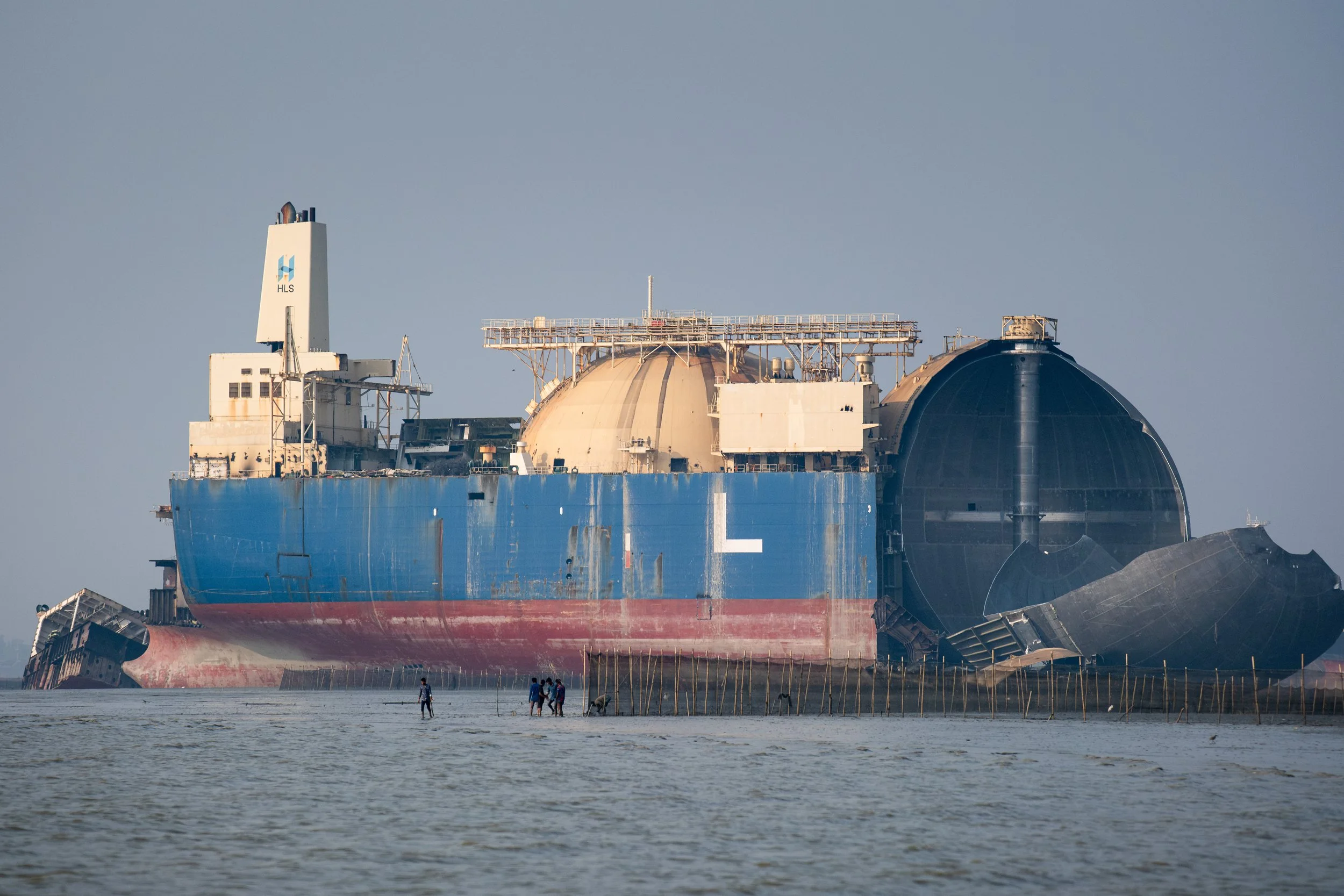
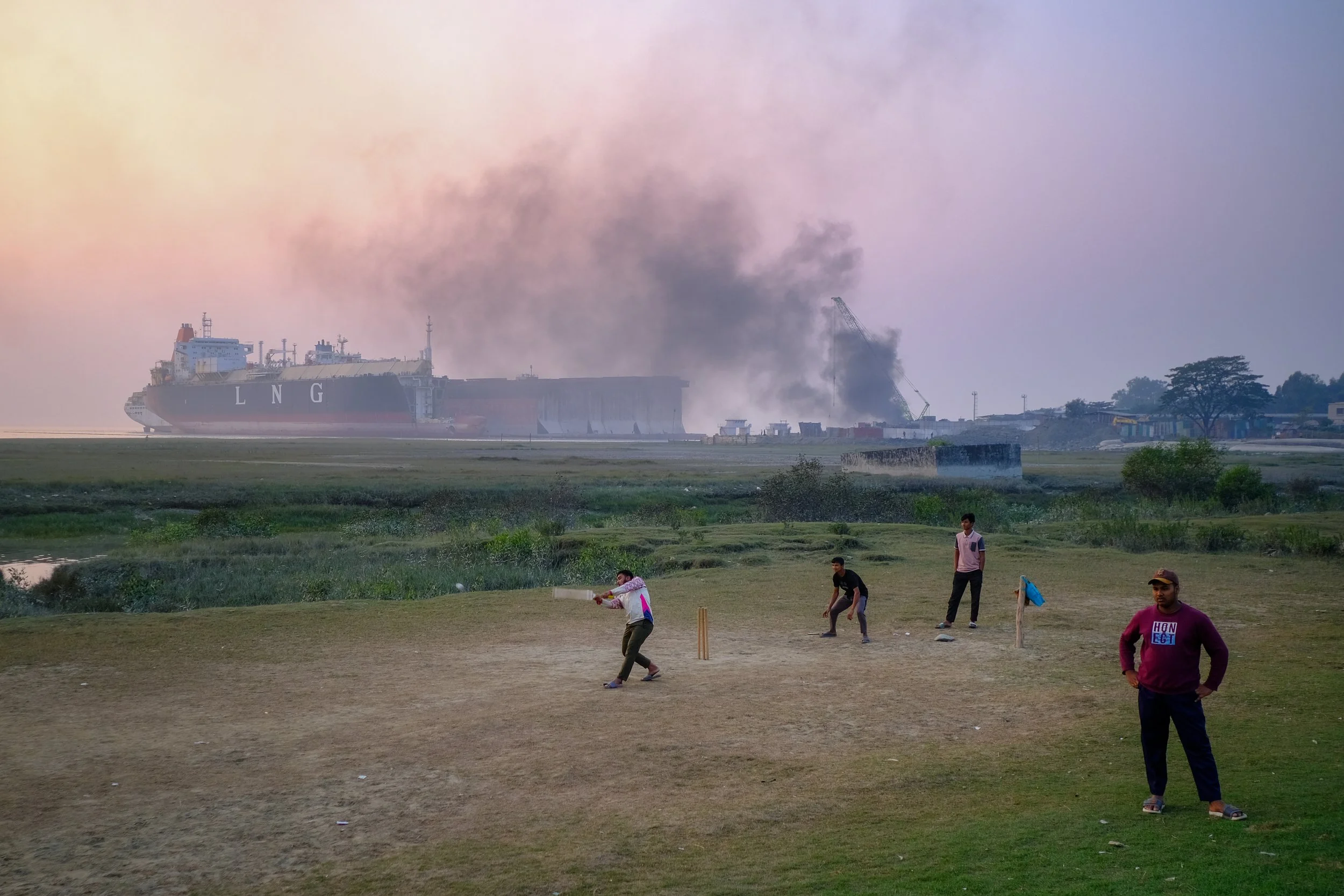
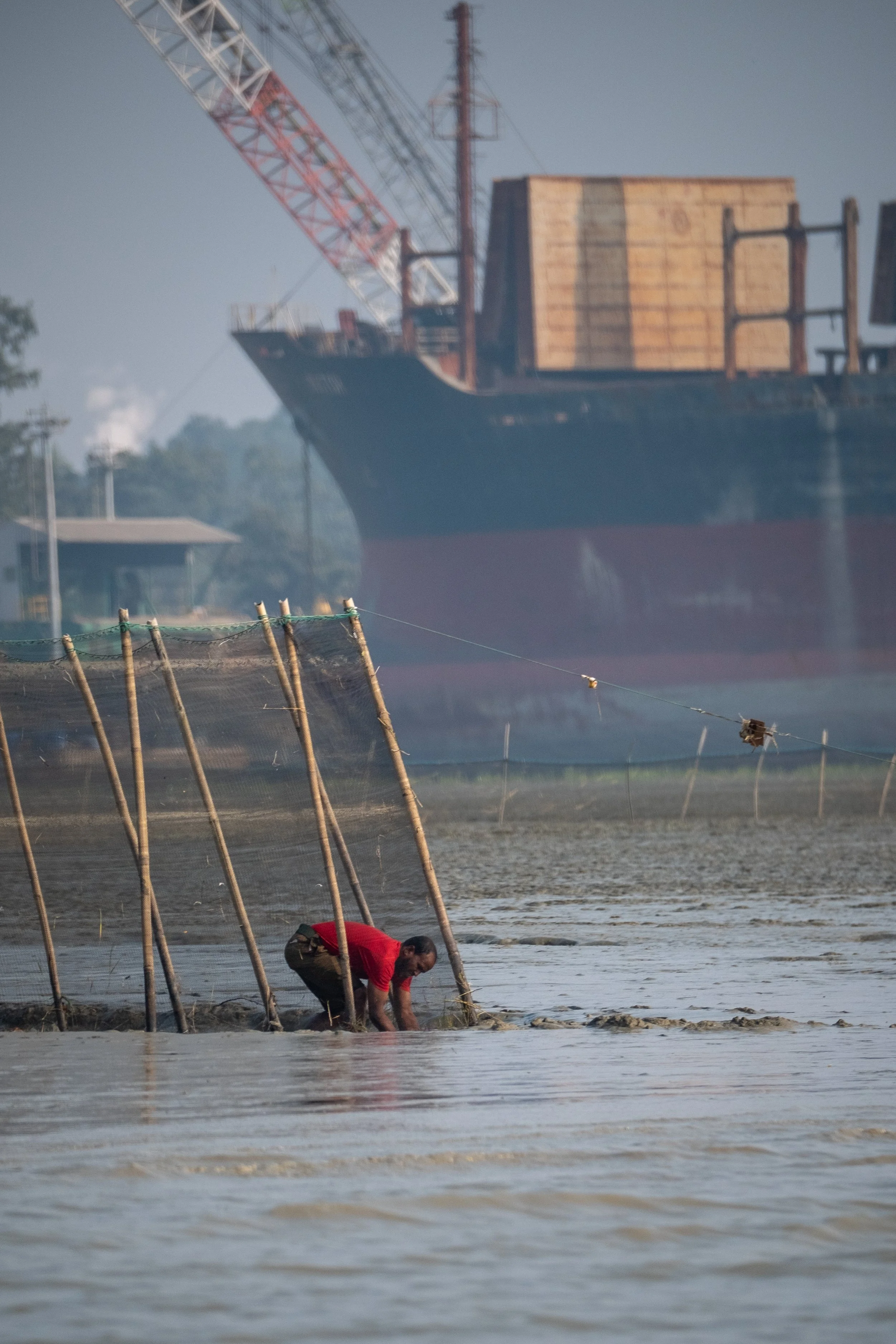
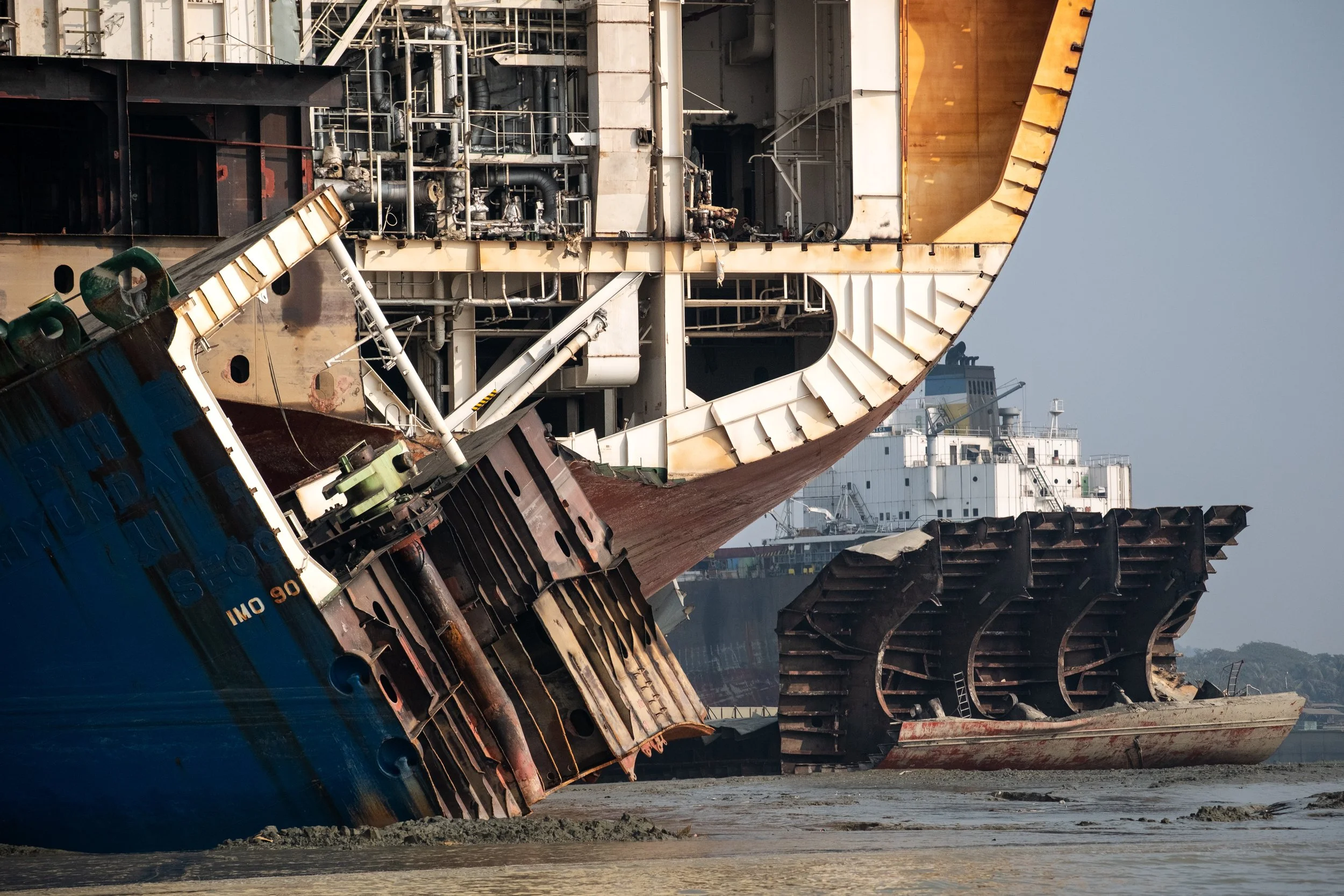
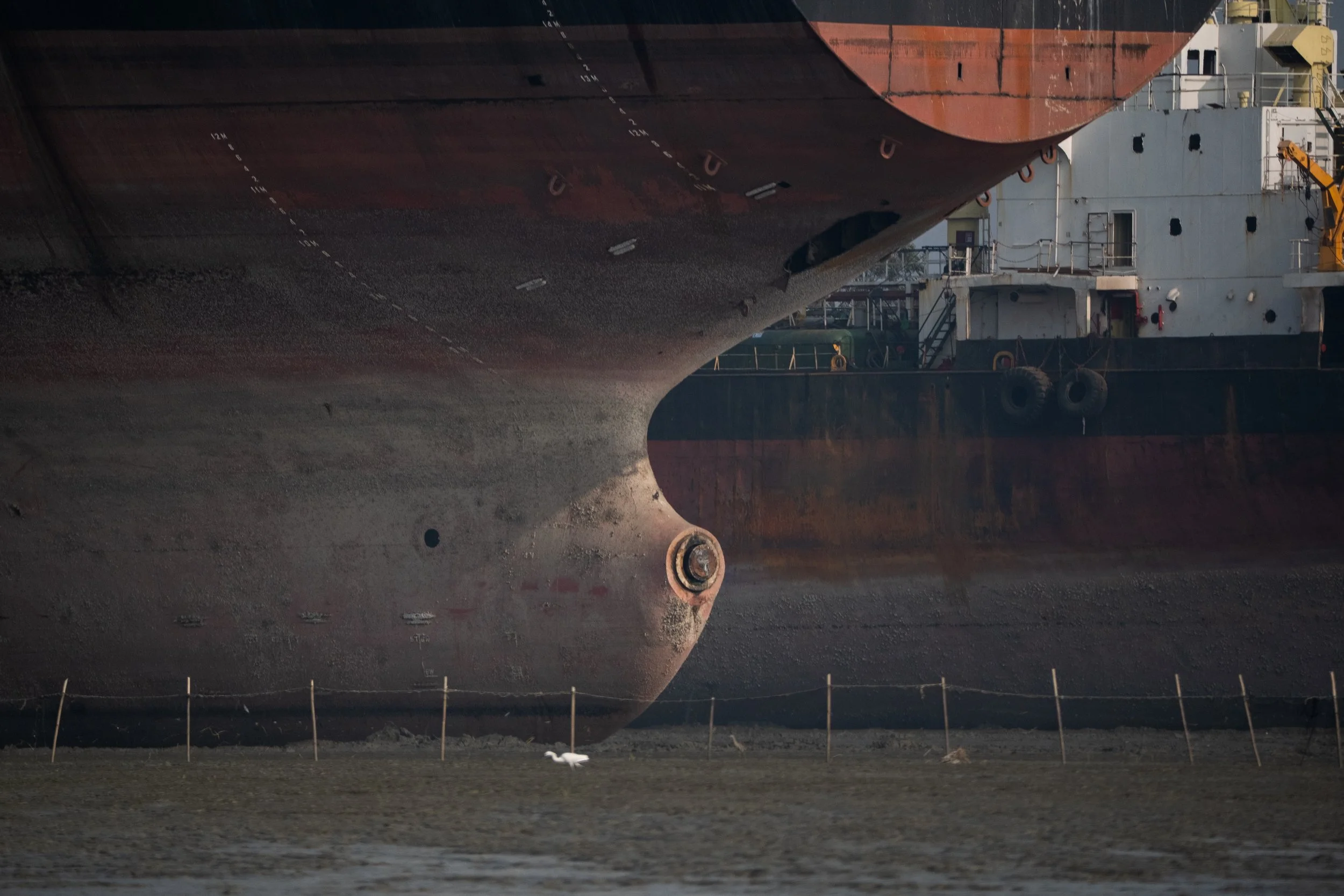
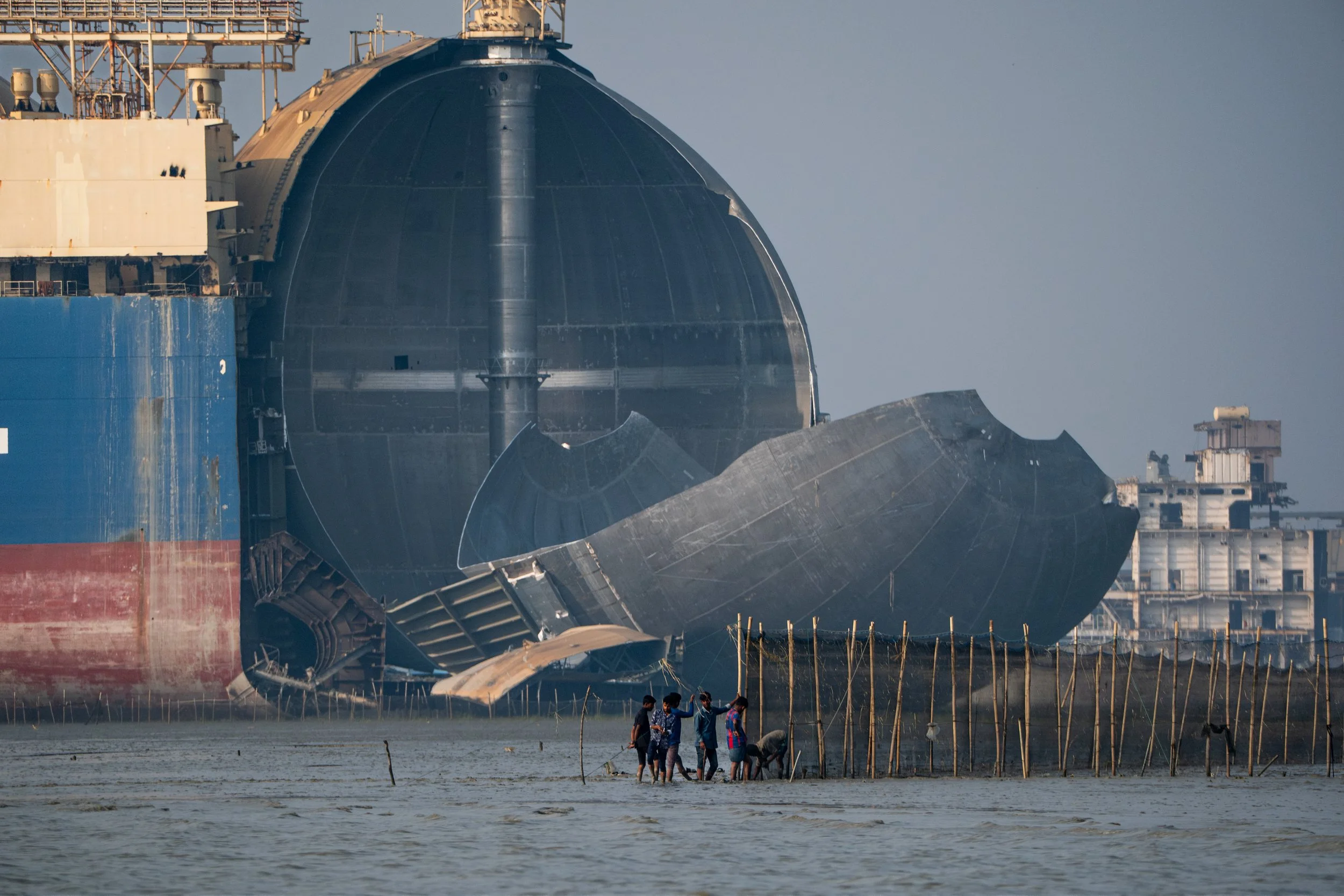
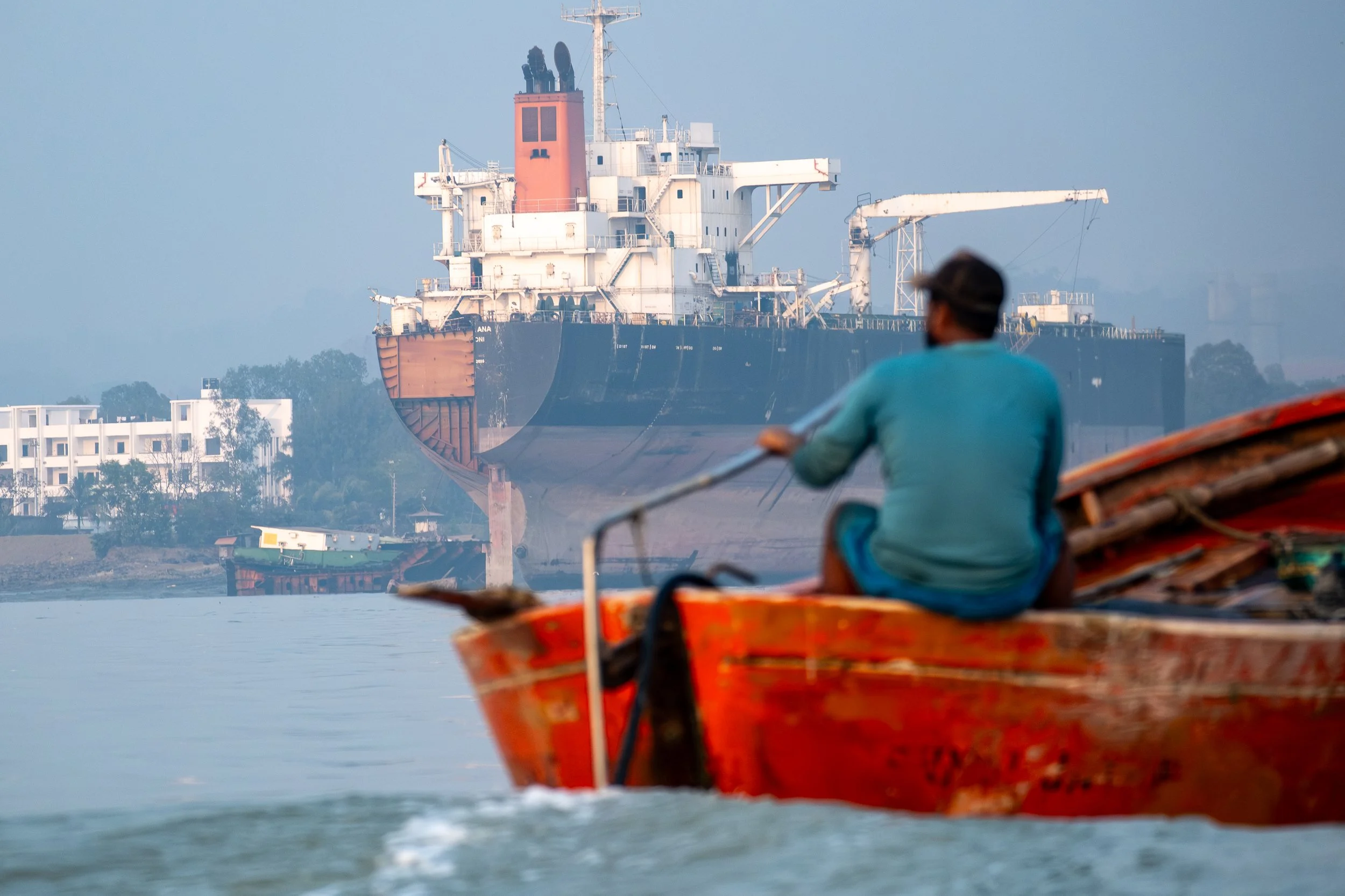
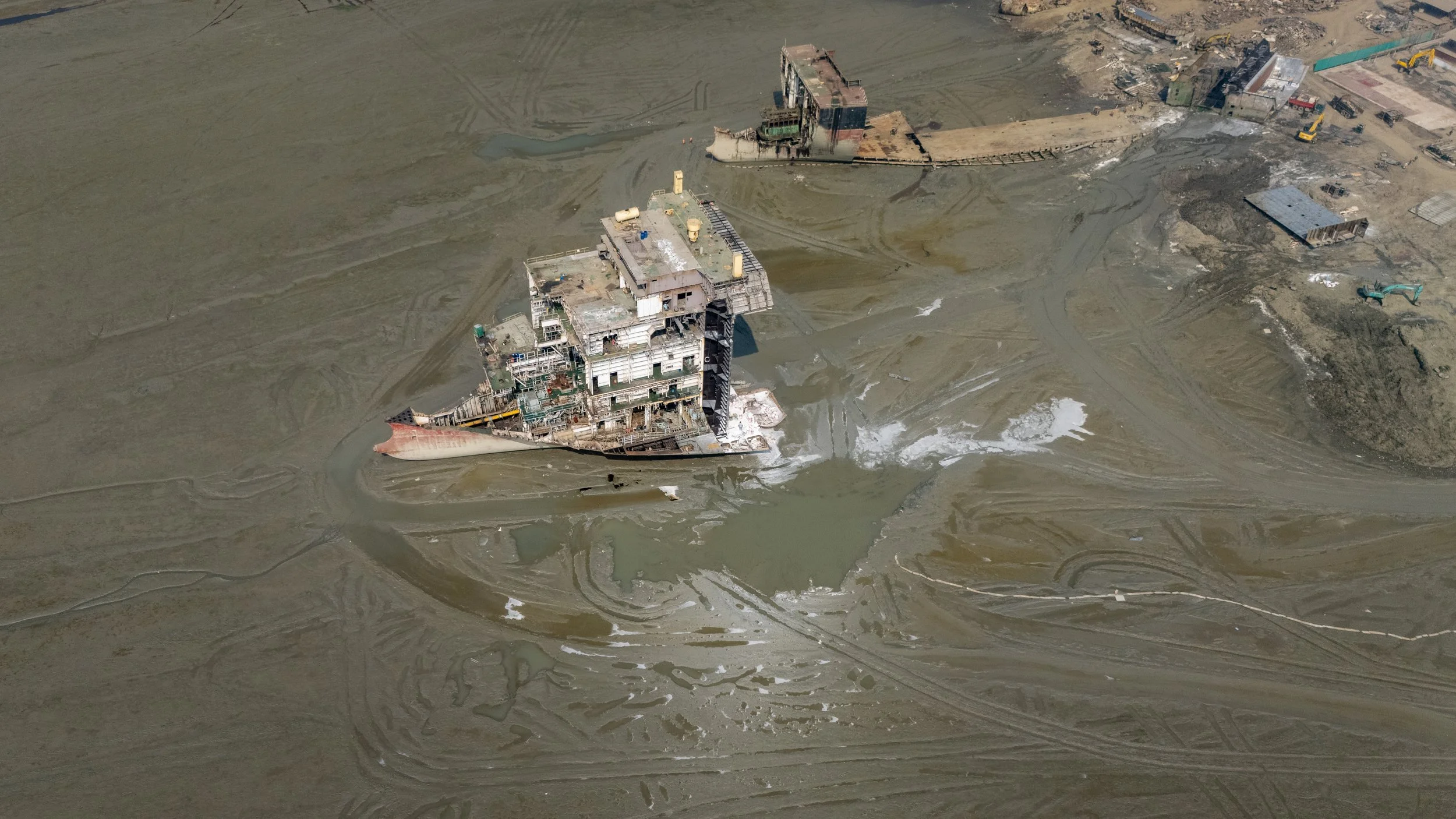
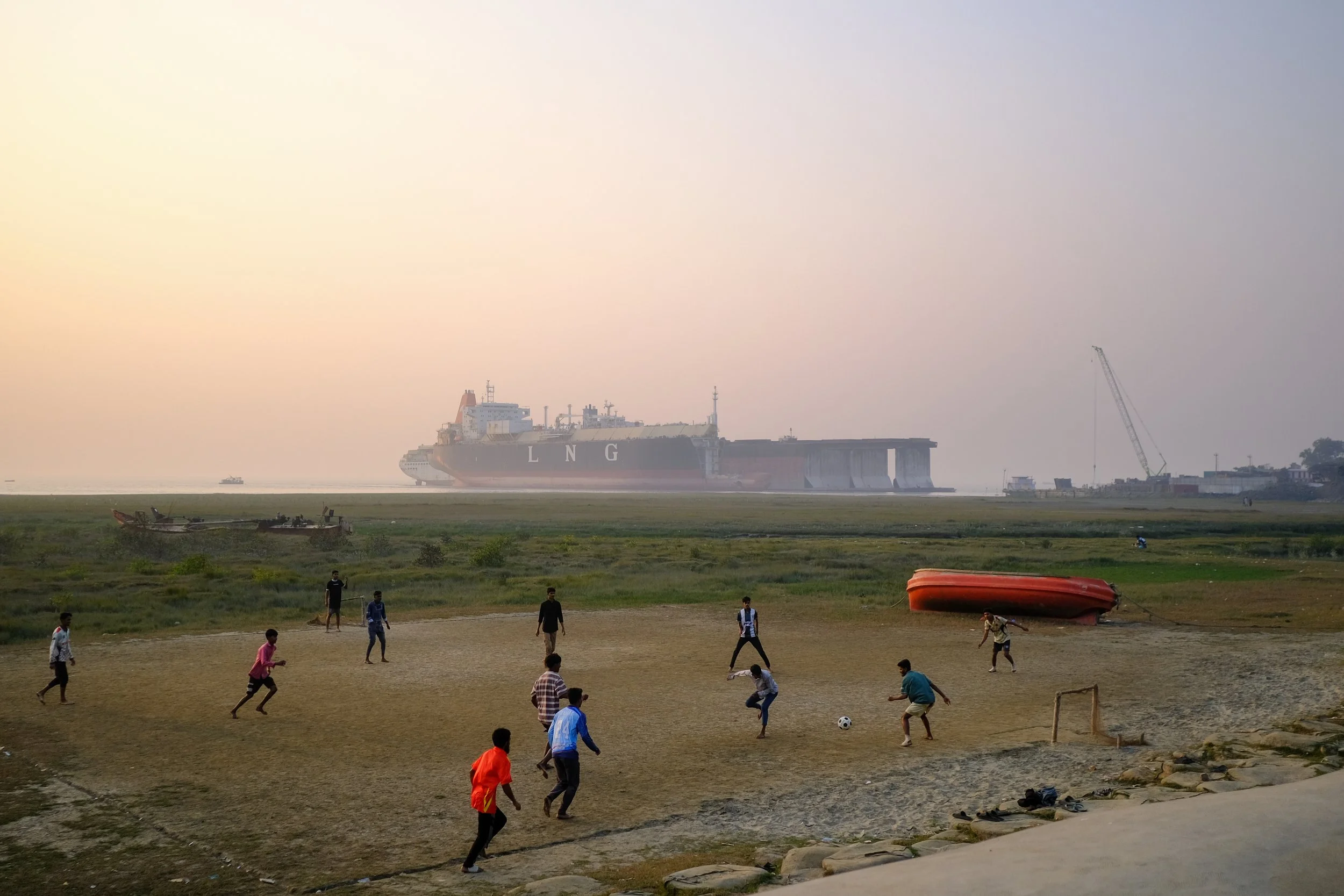
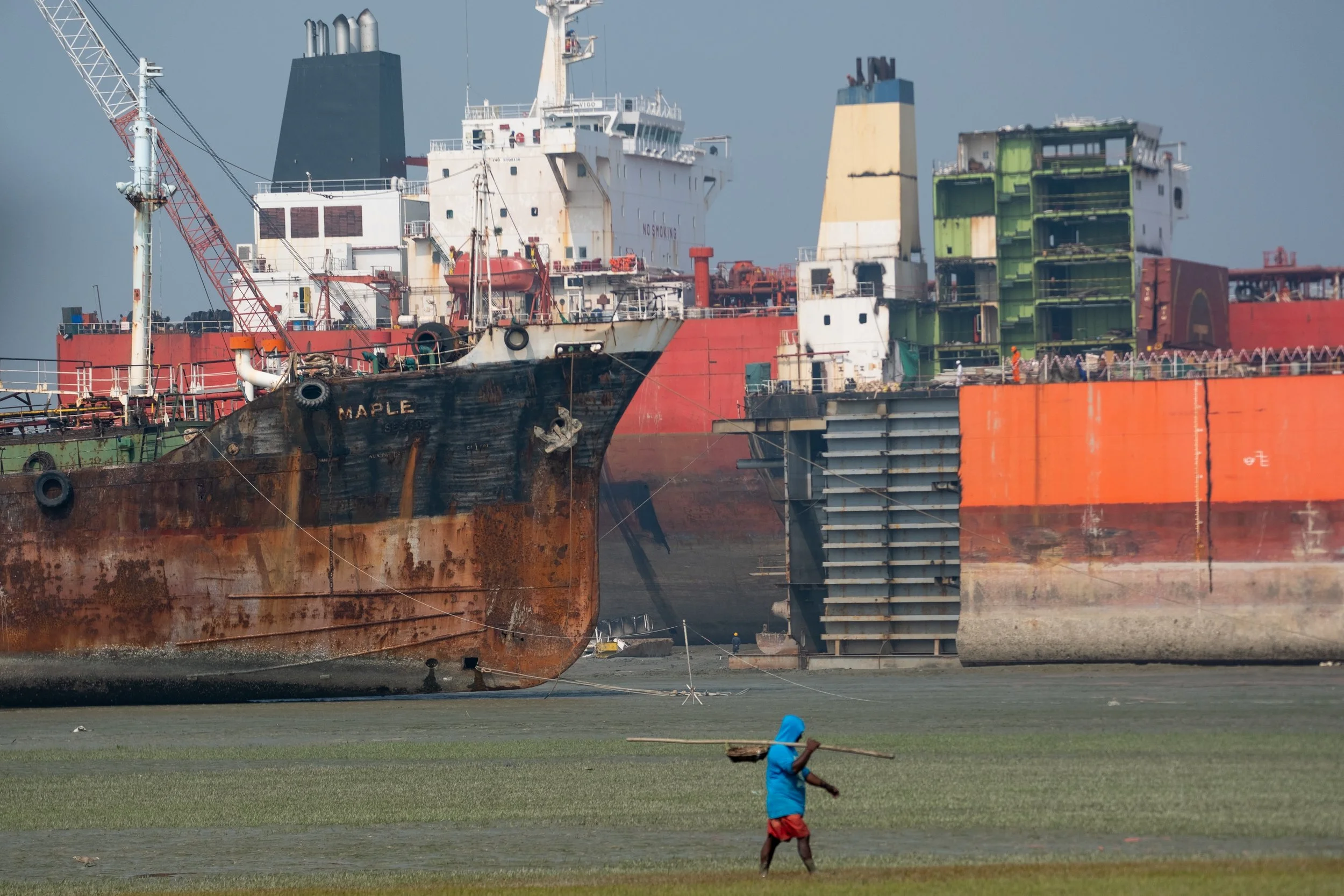
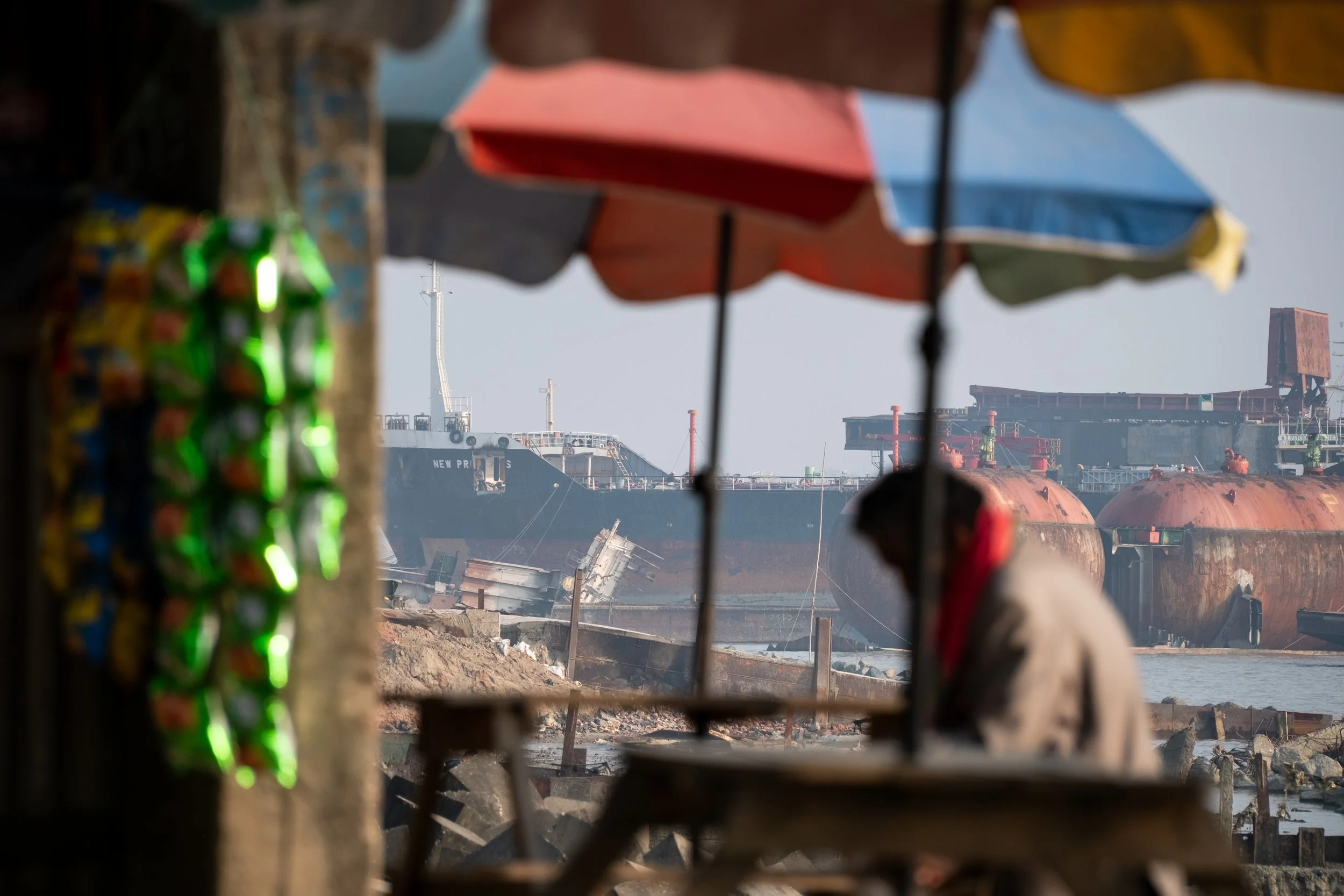
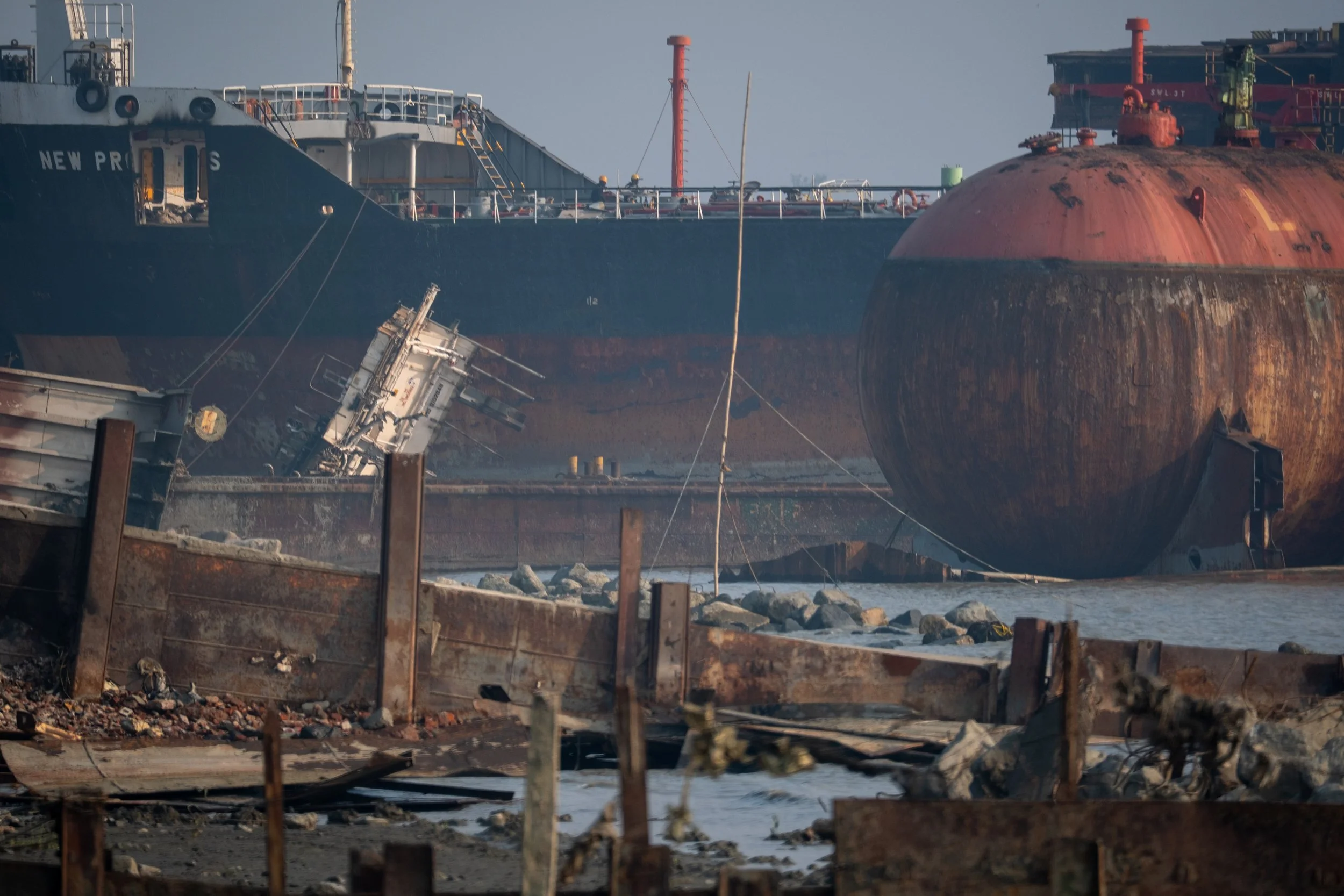
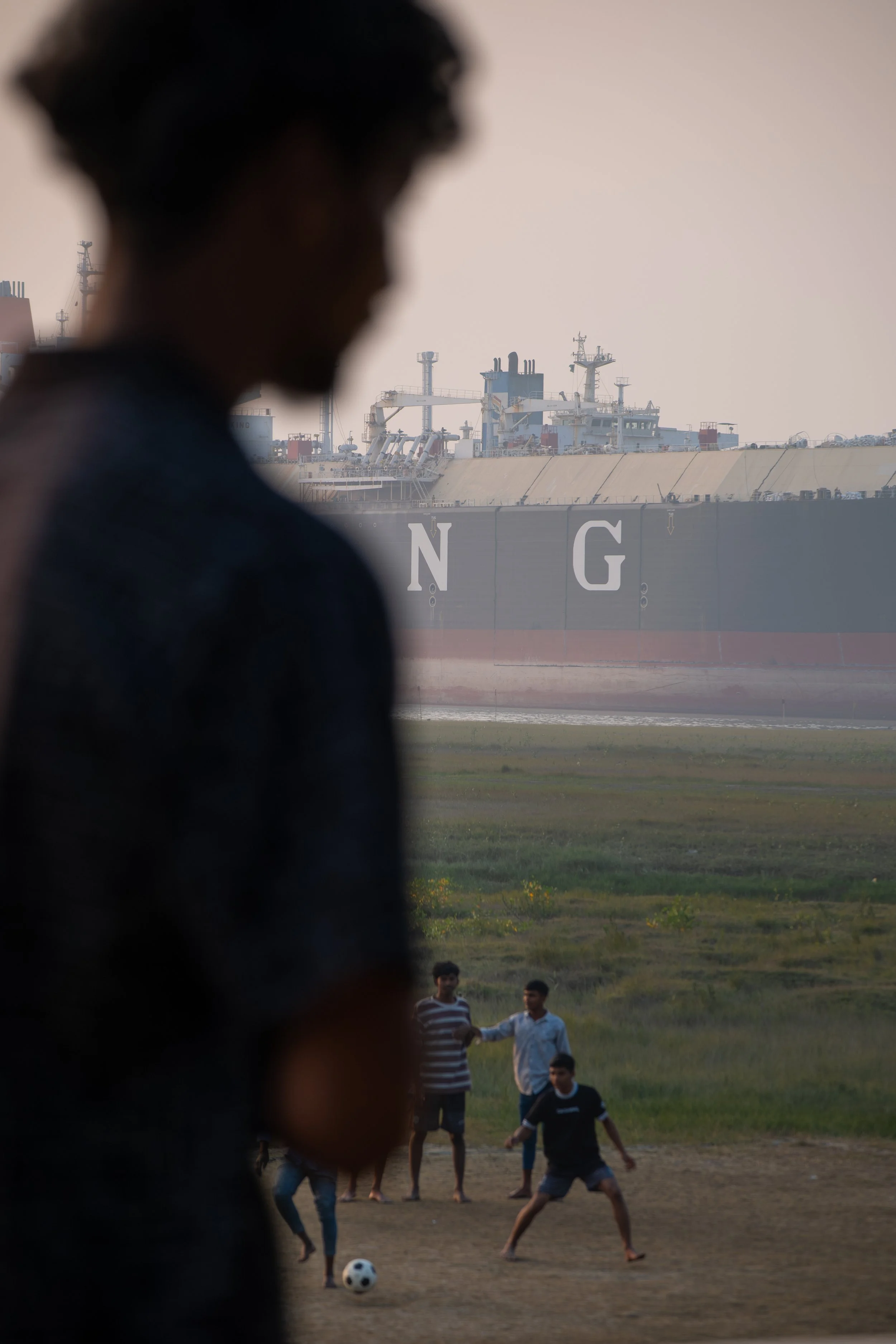
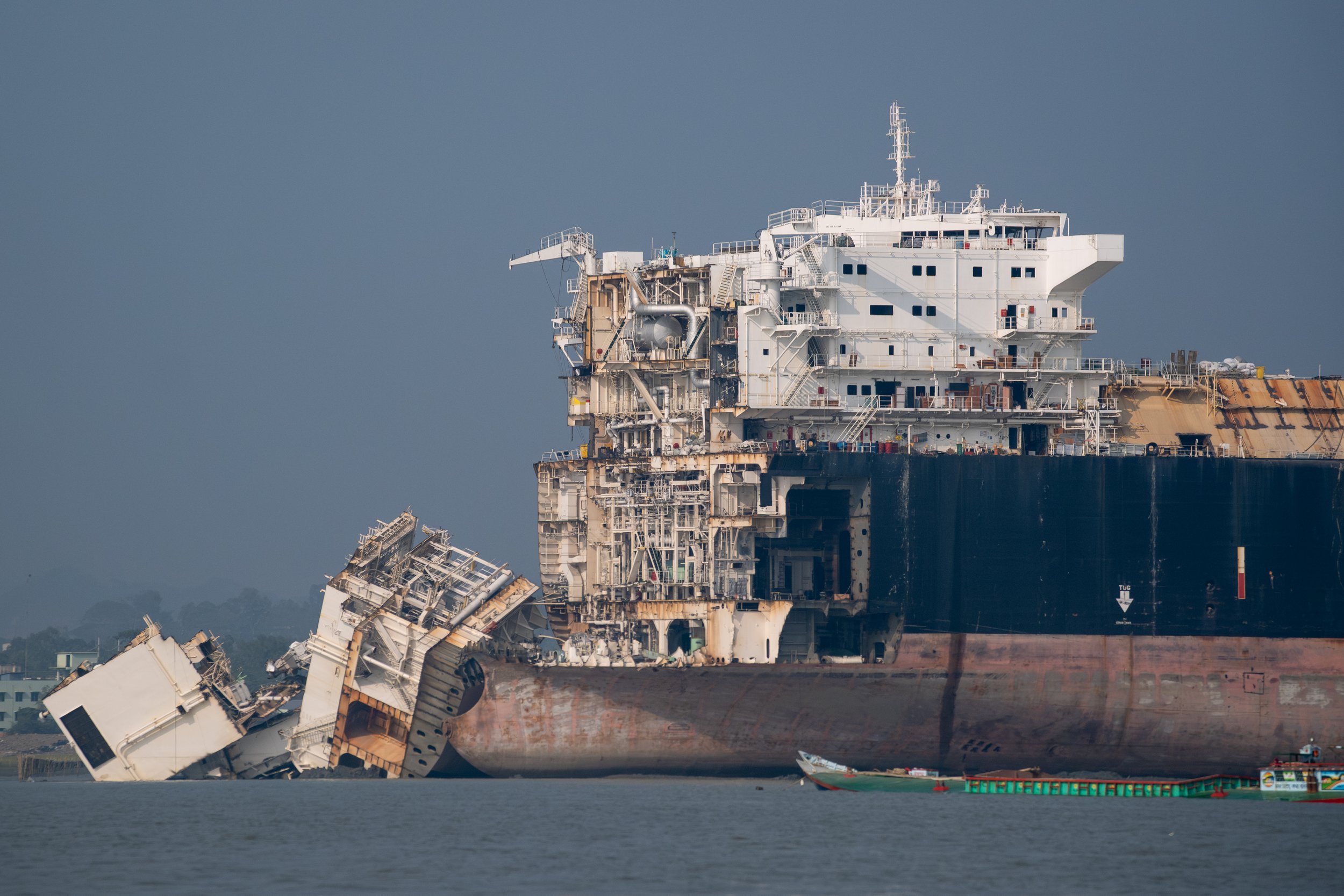
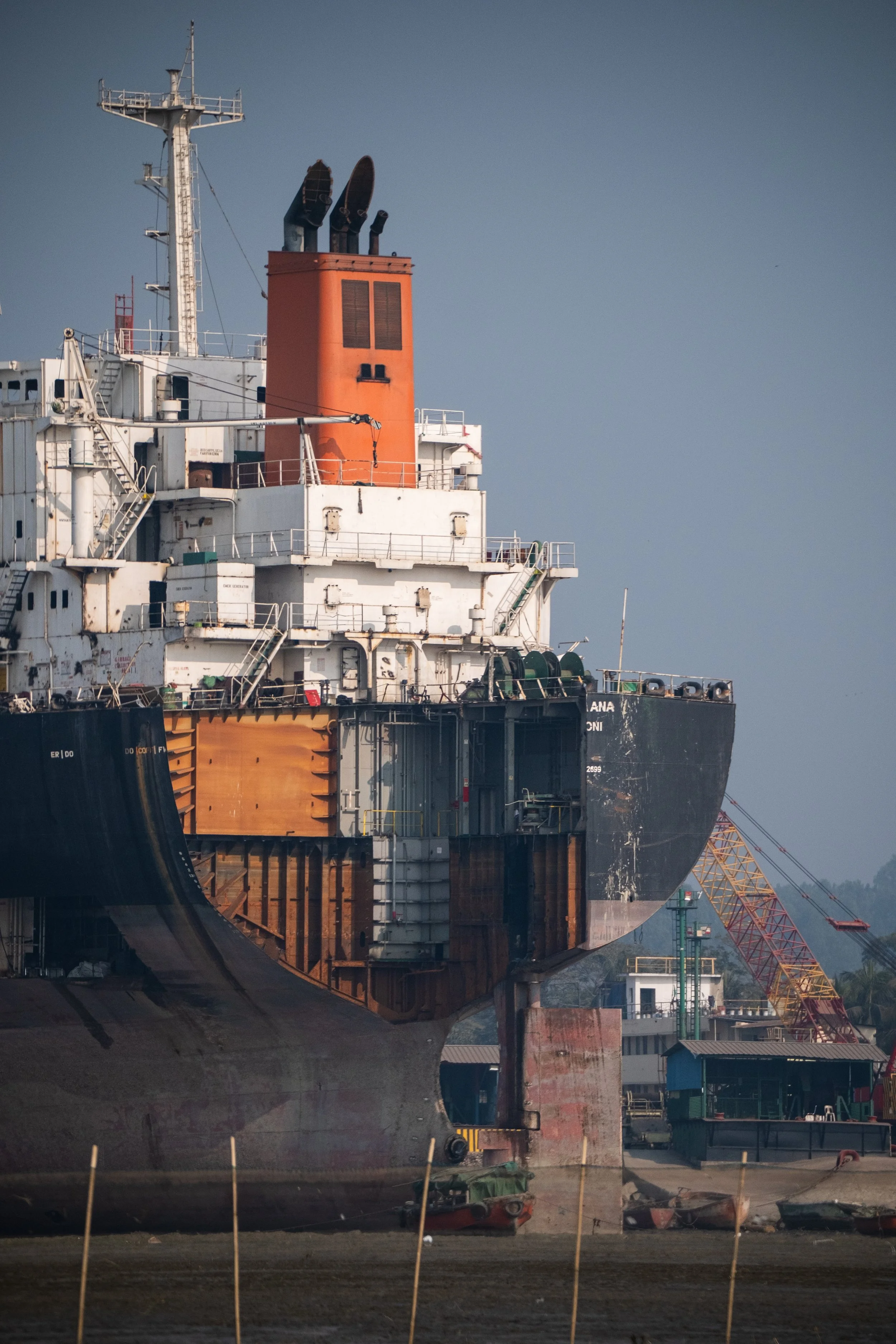
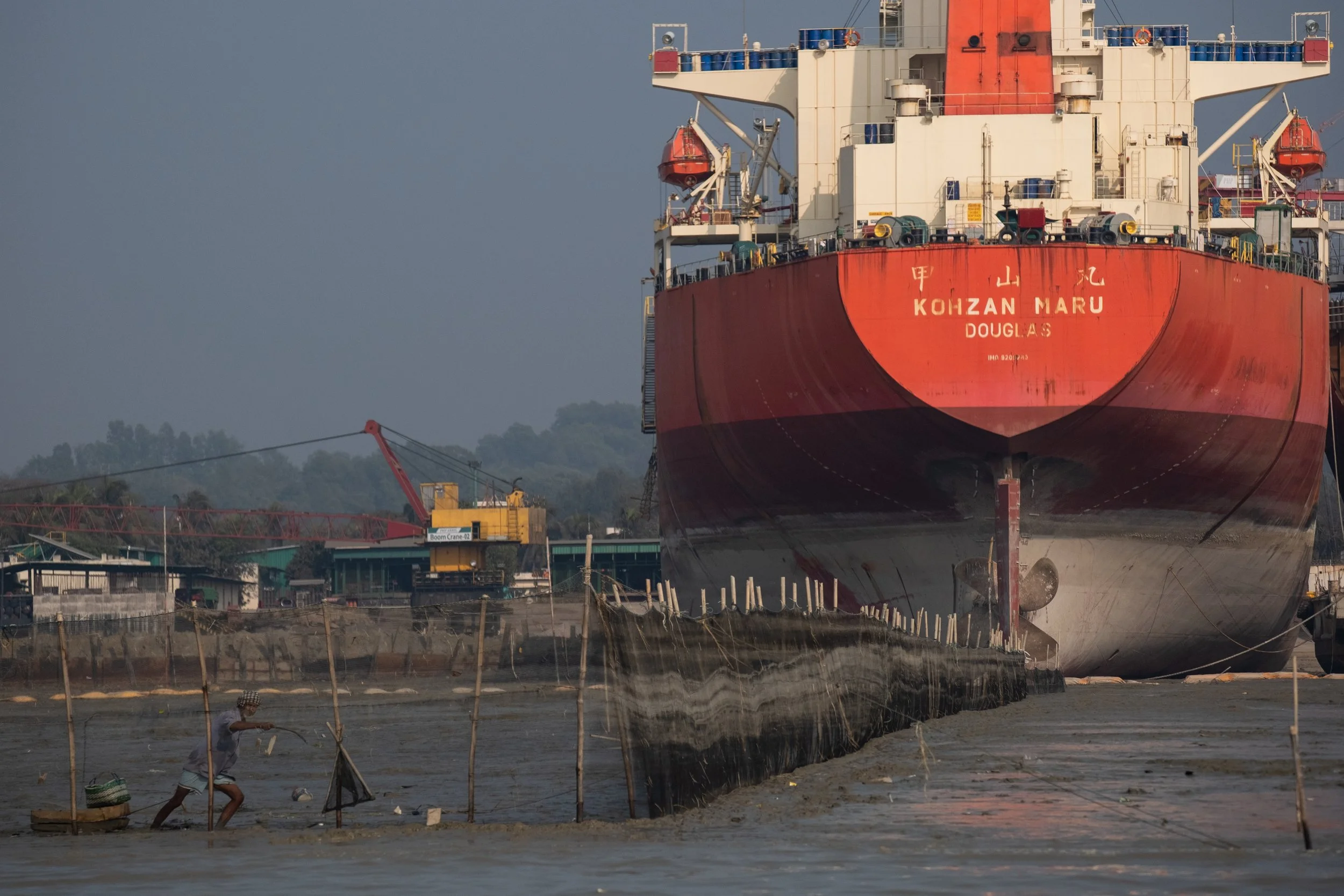
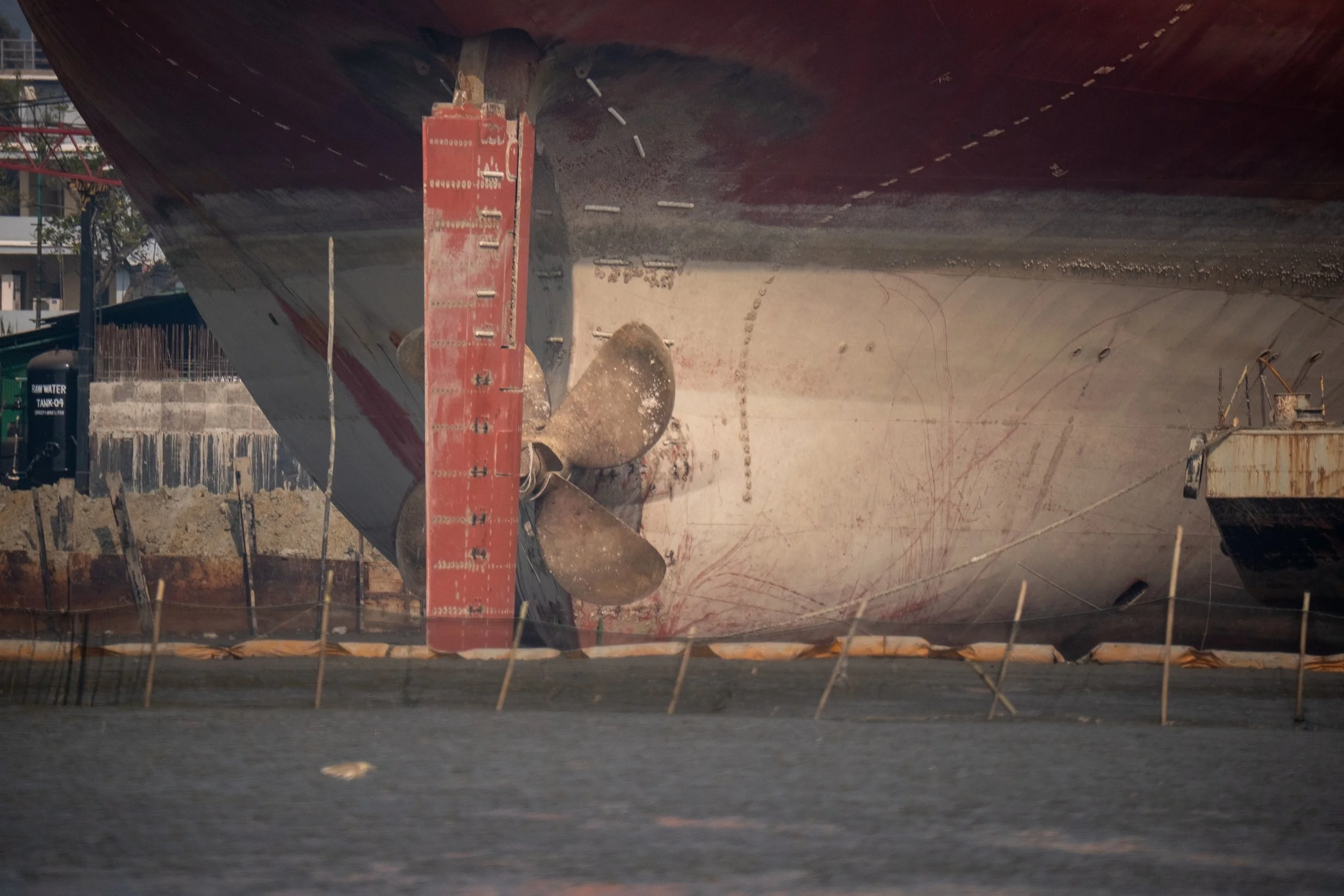
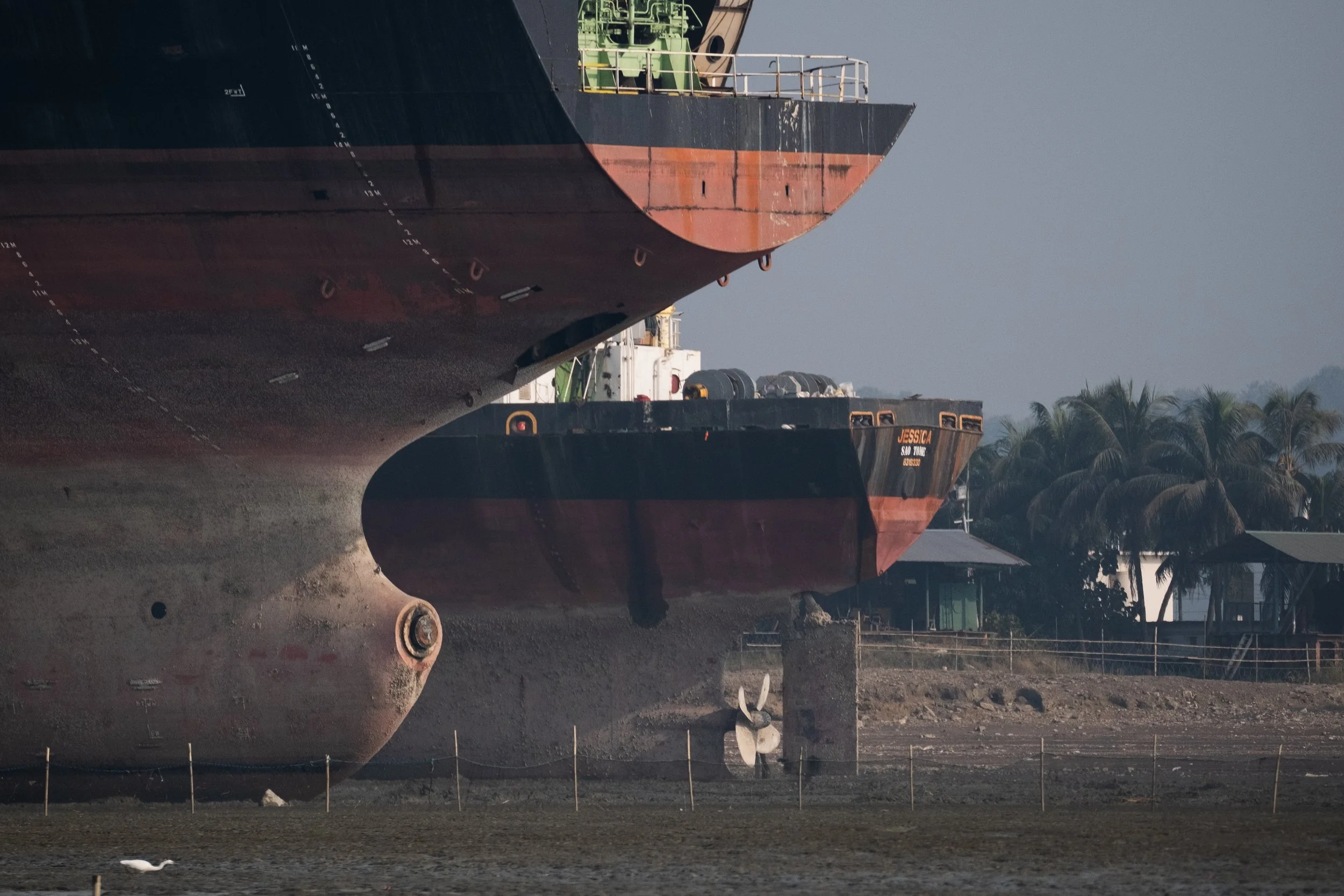
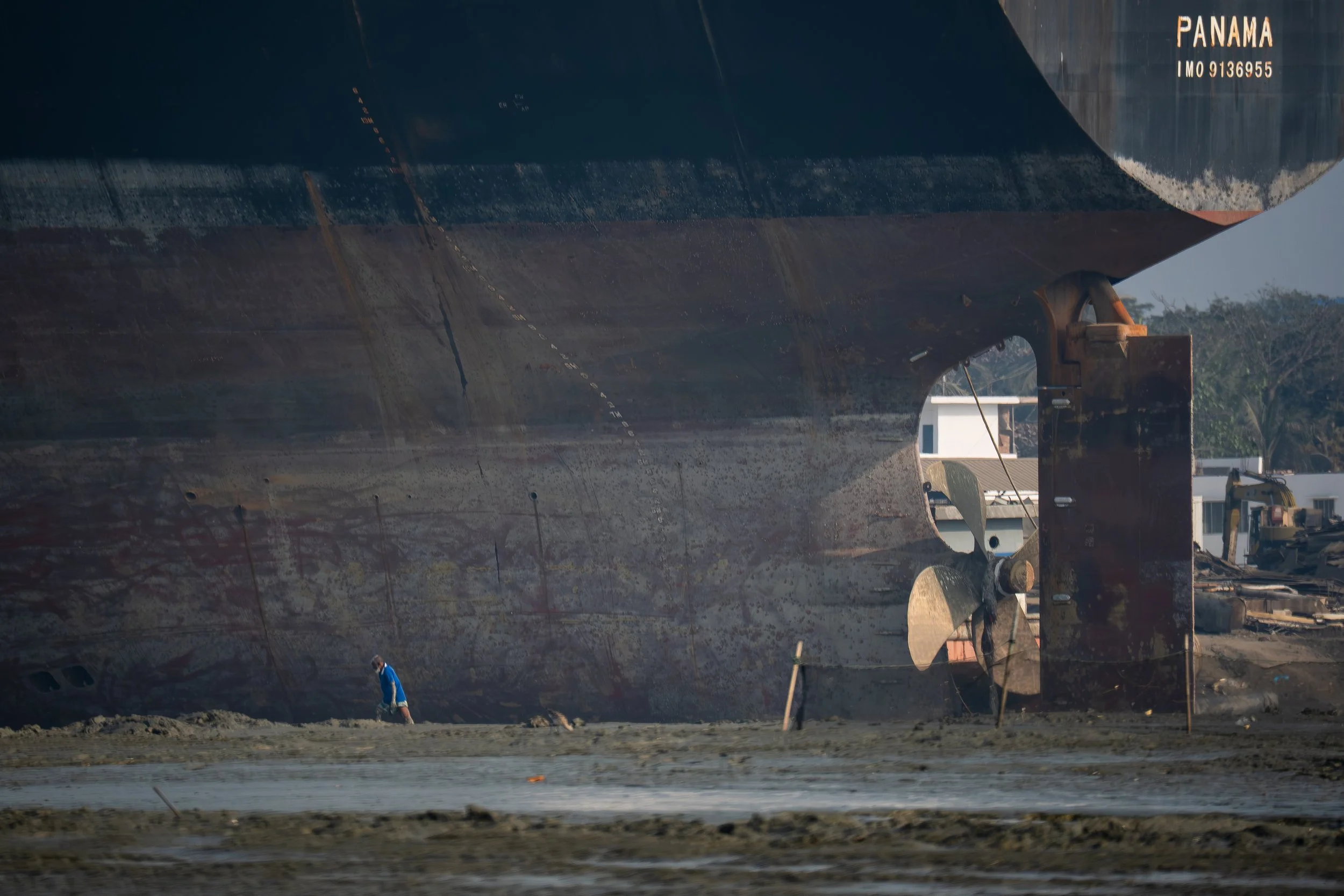
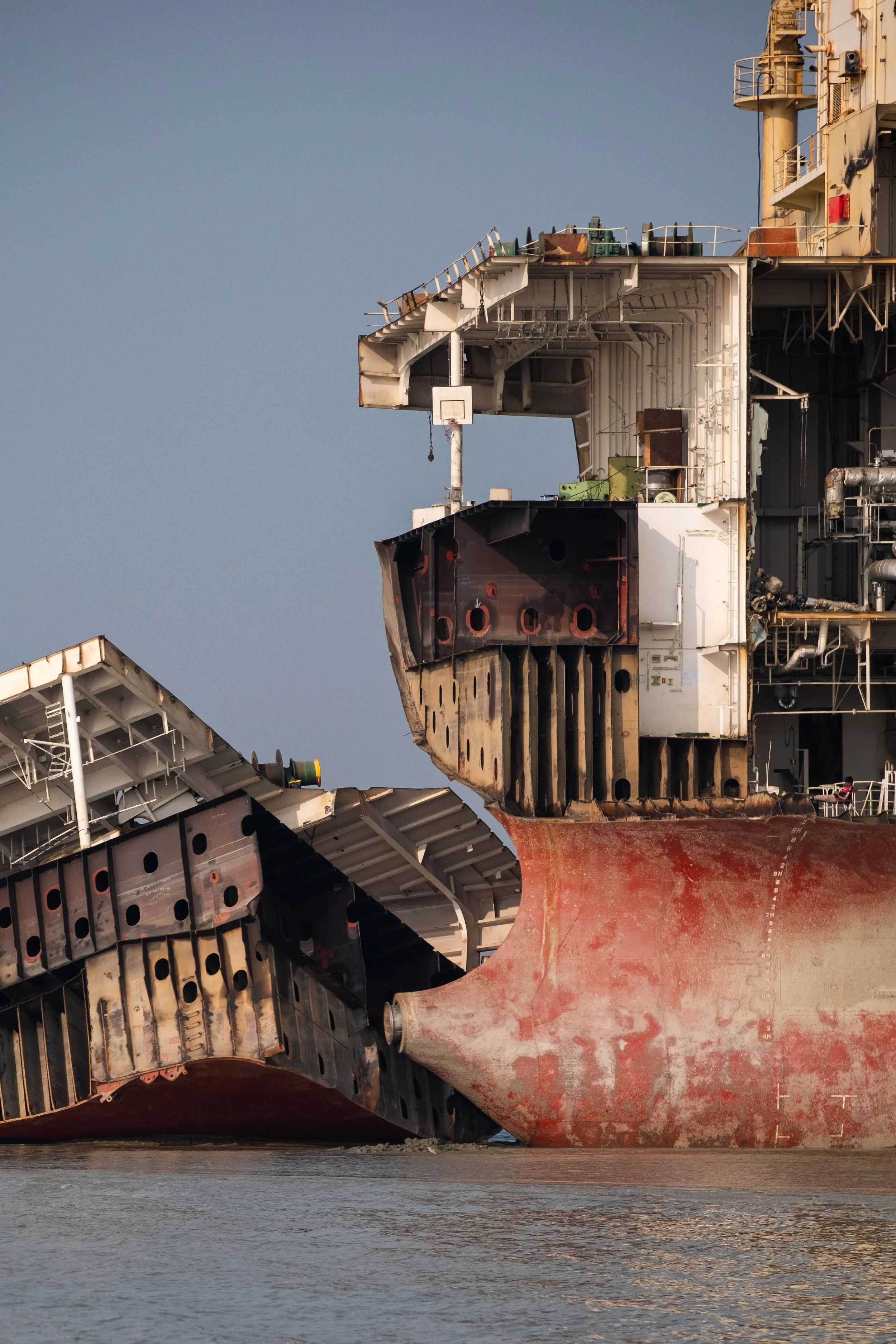
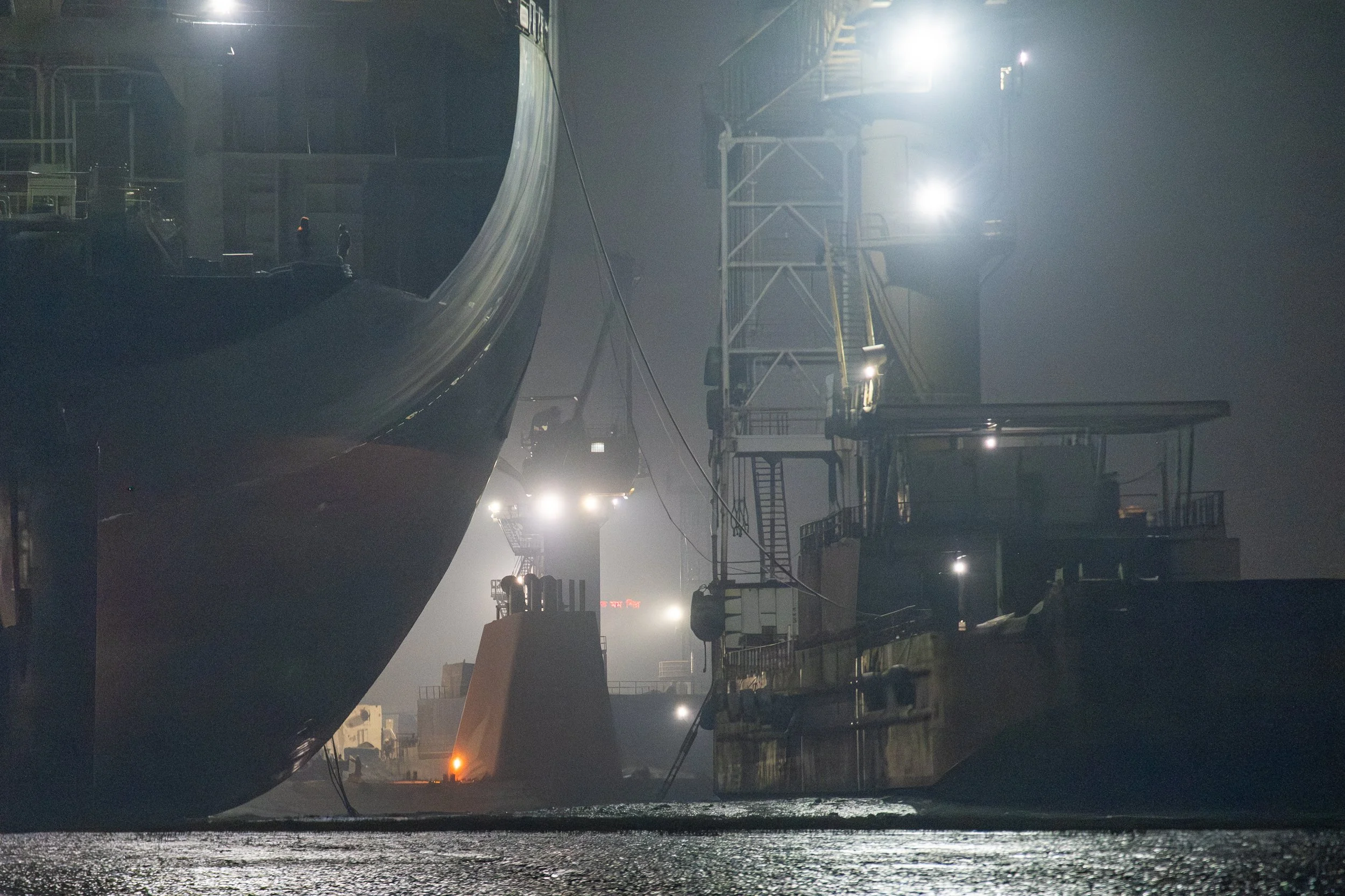
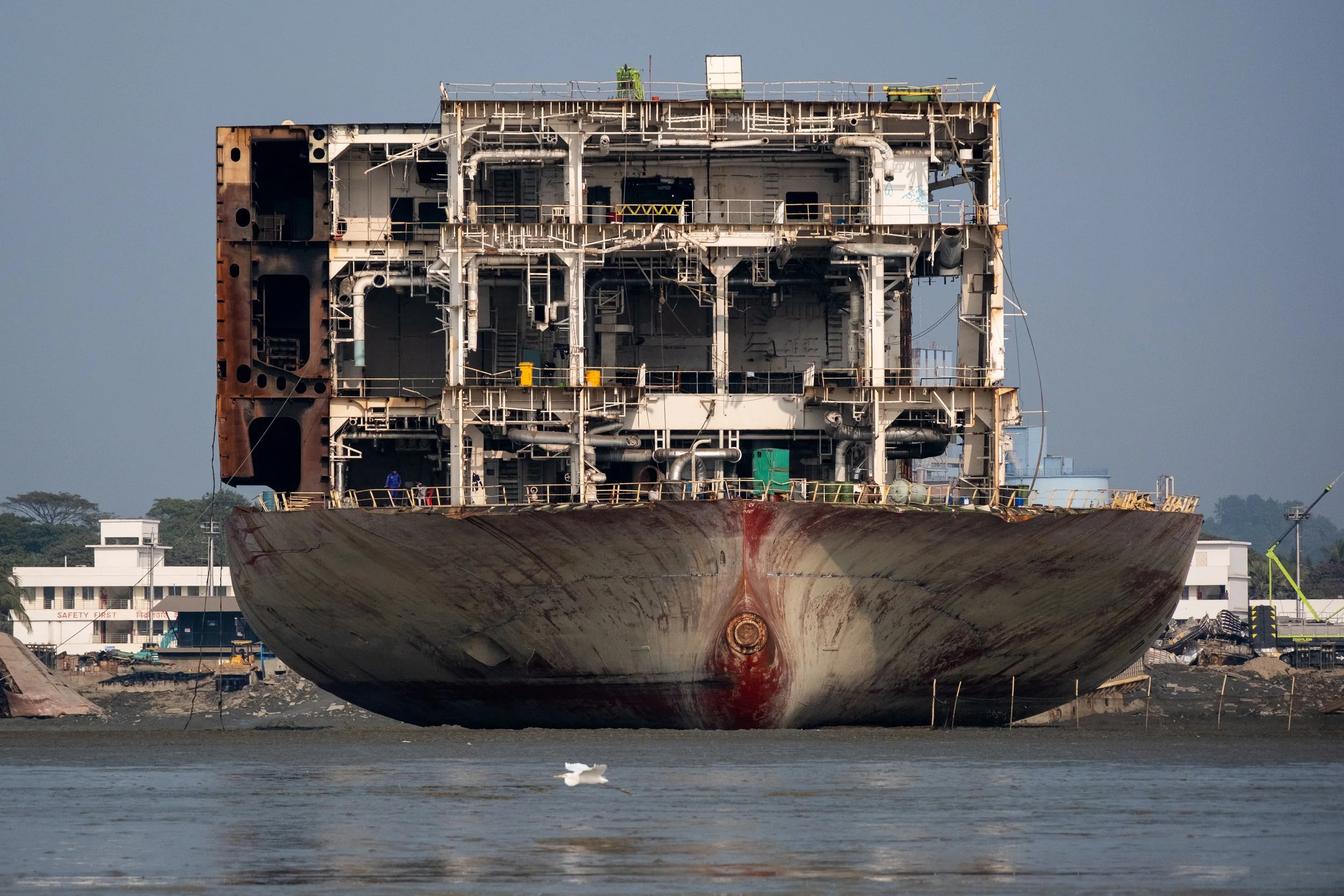
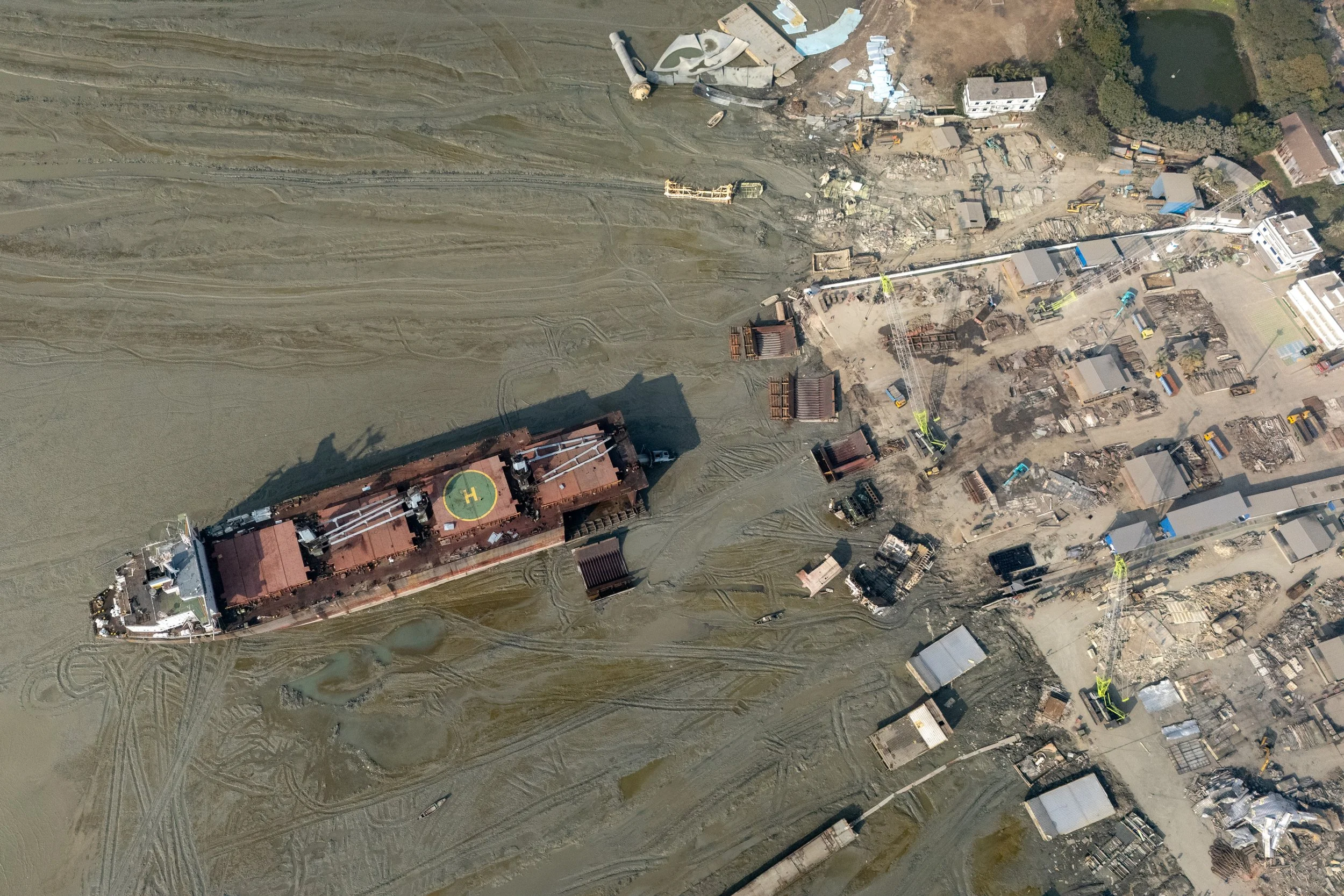
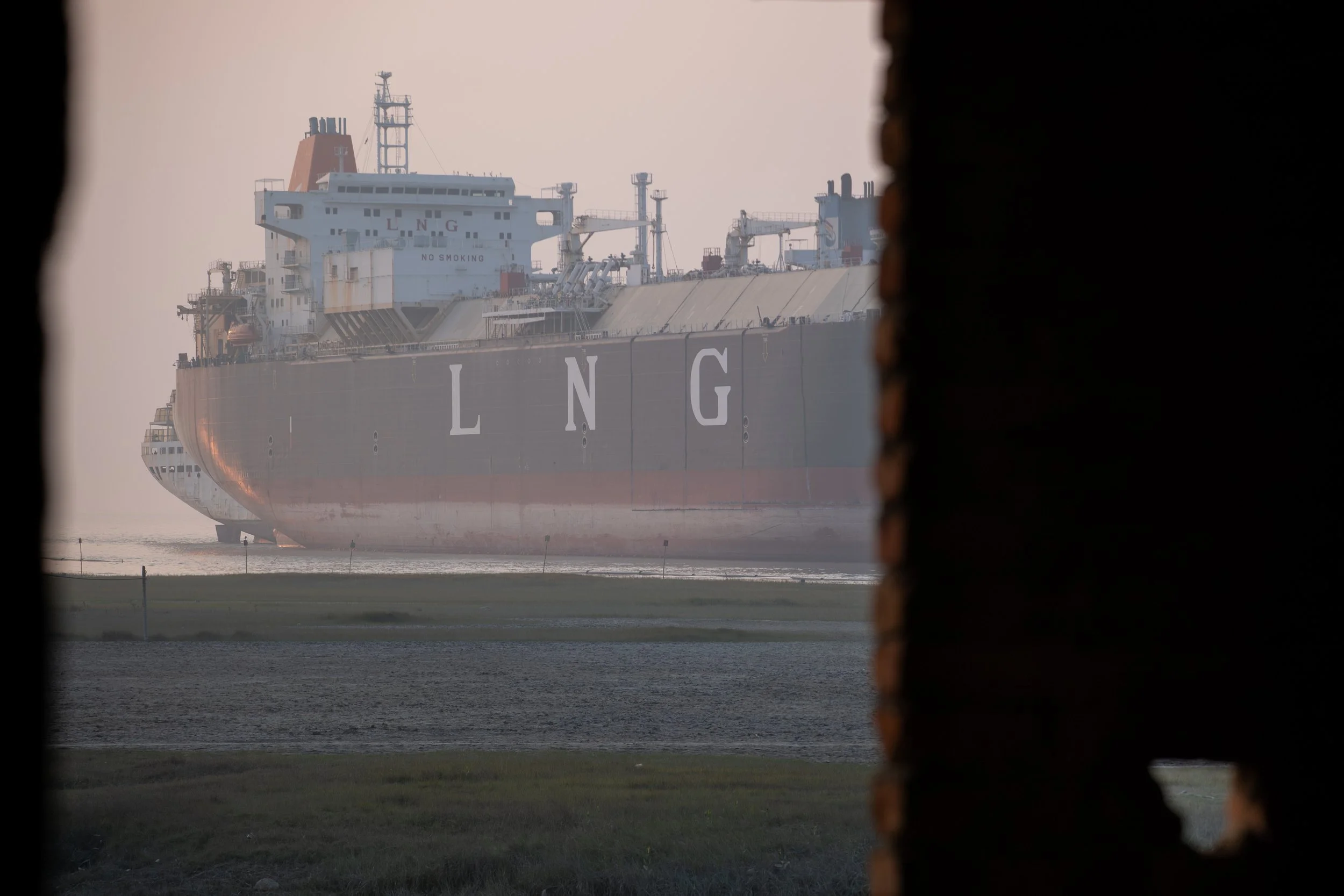
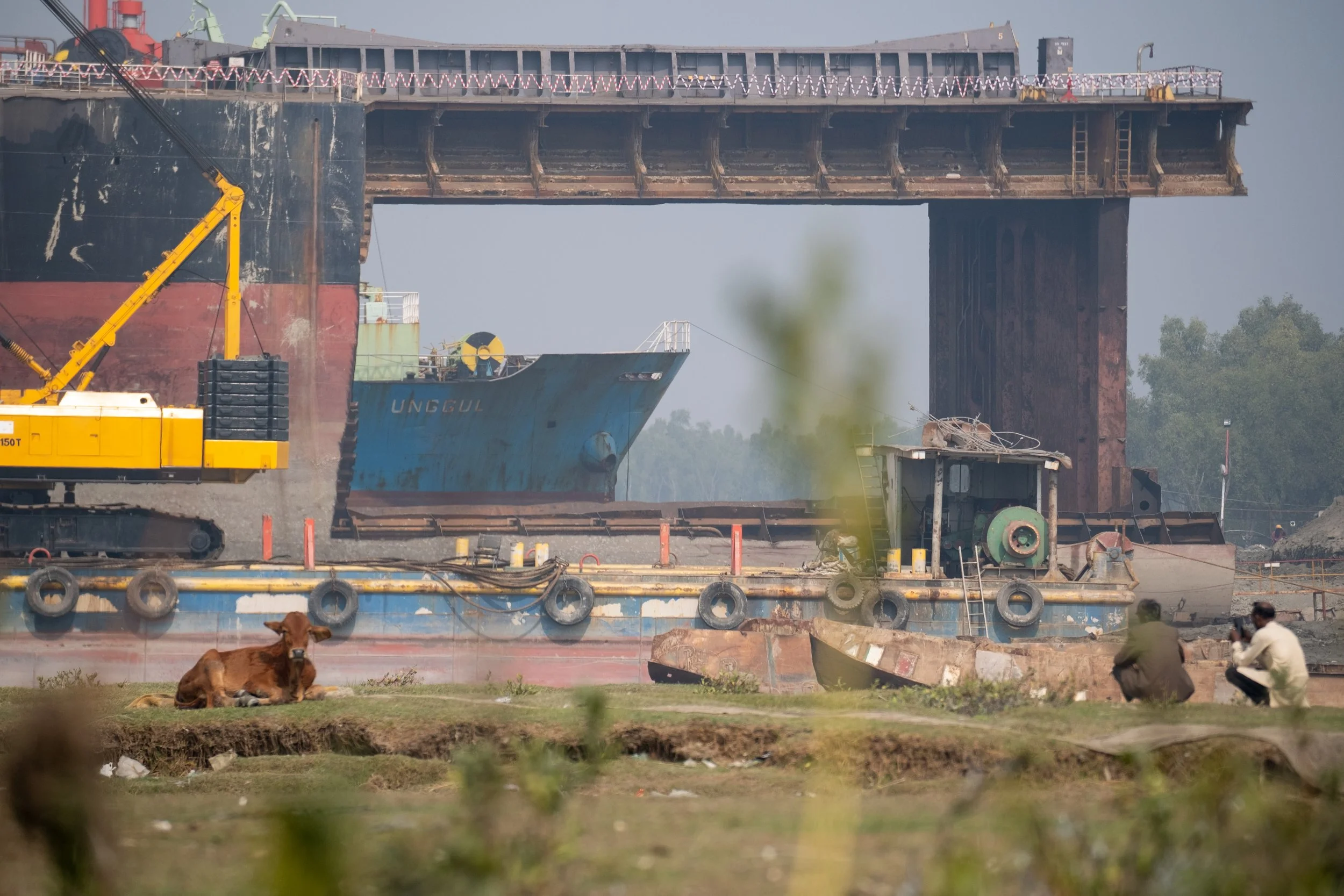
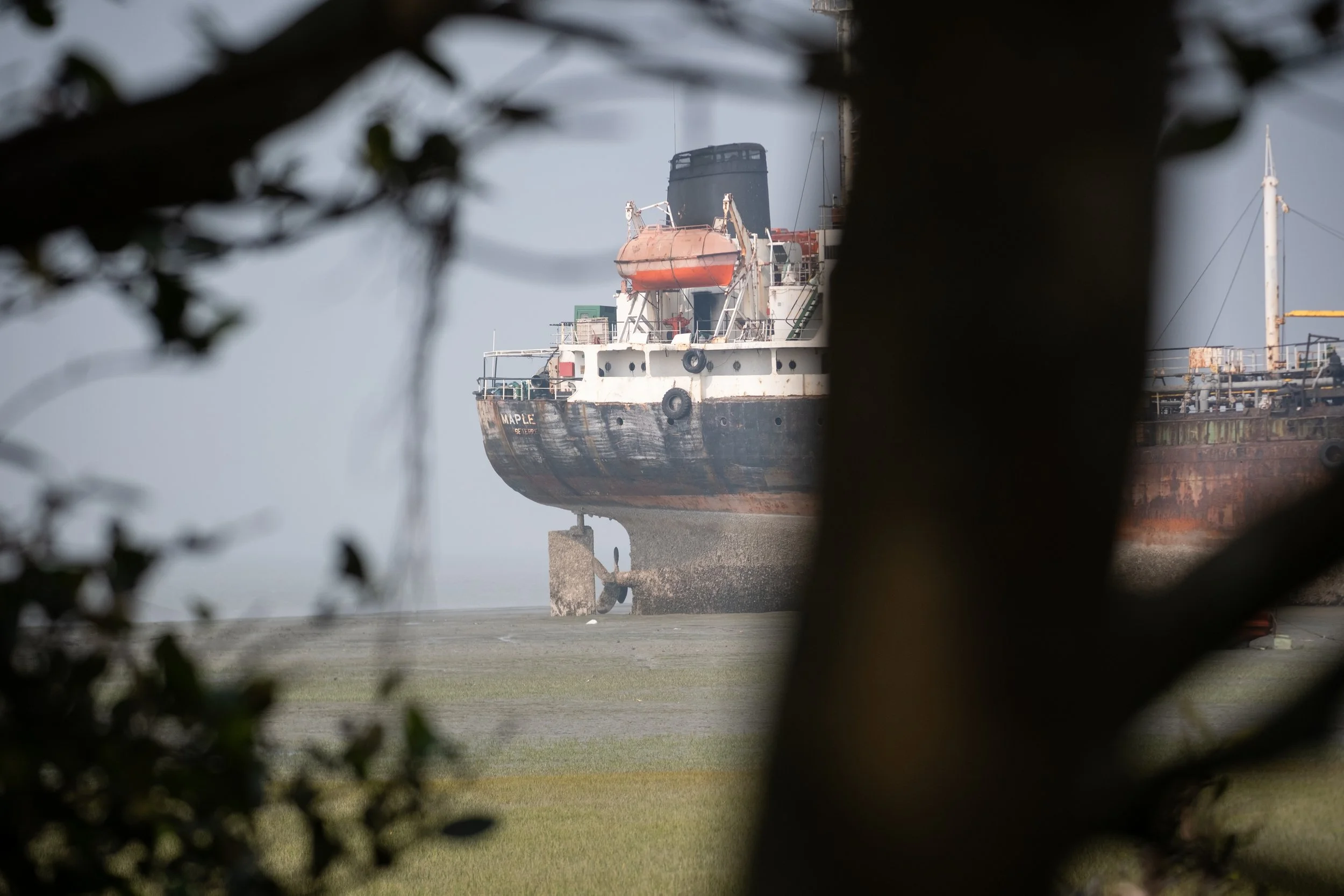
Day and night, without warning the ground shudders and shakes, as if the earth herself is recoiling from what is being done on her beaches. Spanning from Faujdarhat north to Sitakunda lies a graveyard for our rusting islands of commerce. Here along the coast of Chittagong, Bangladesh, sits the largest dumping ground in the world for vessels that have reached the end of their lives.
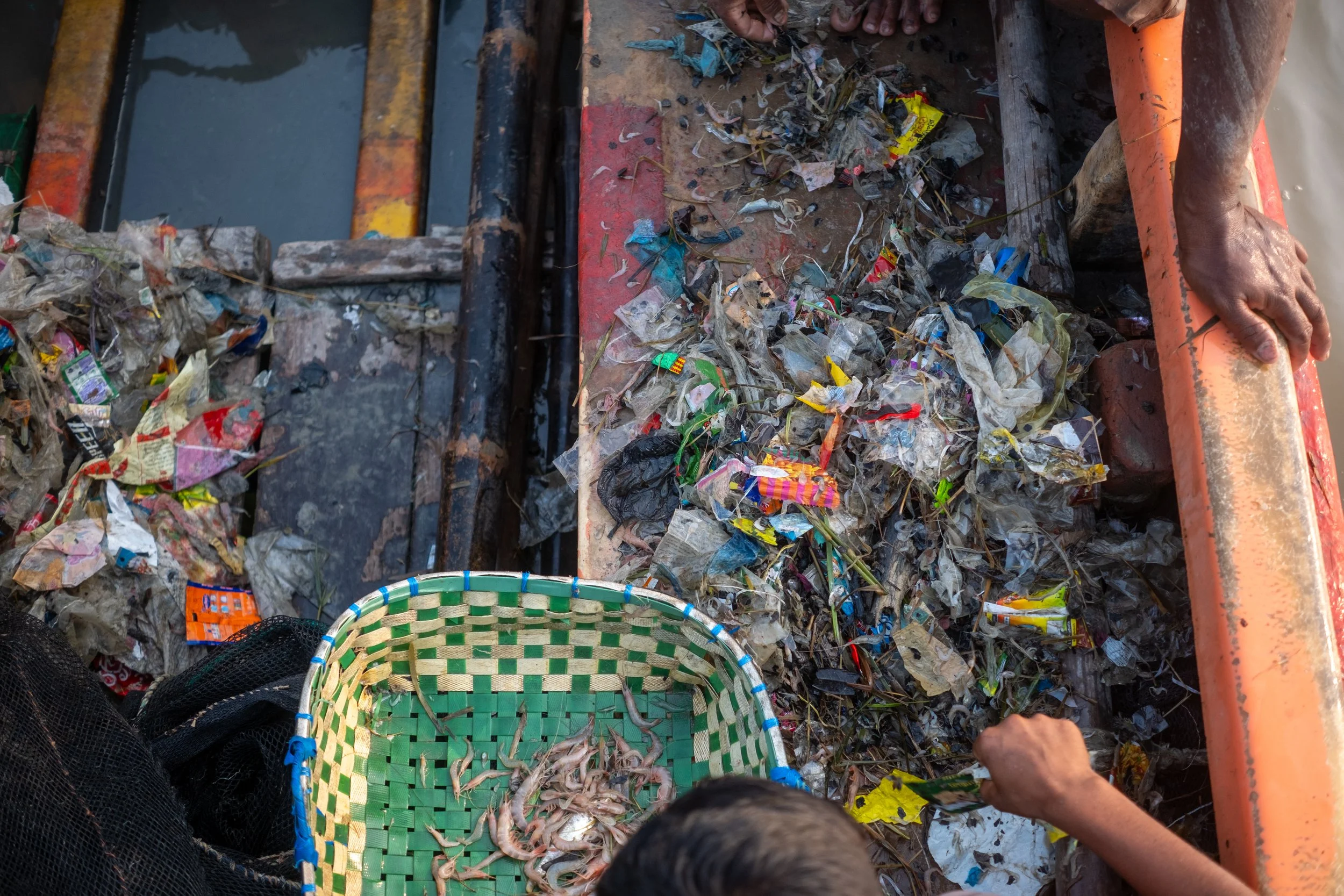
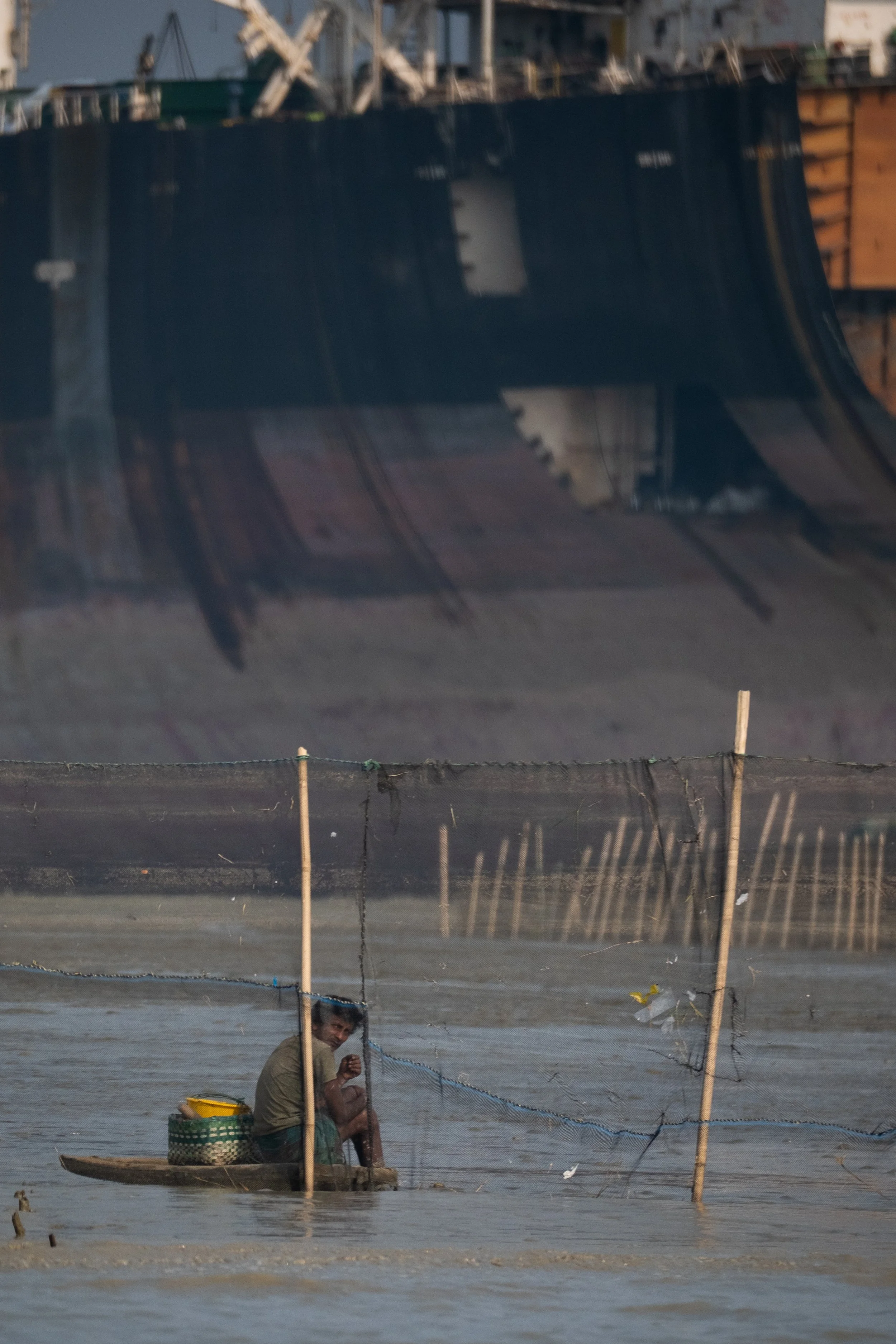
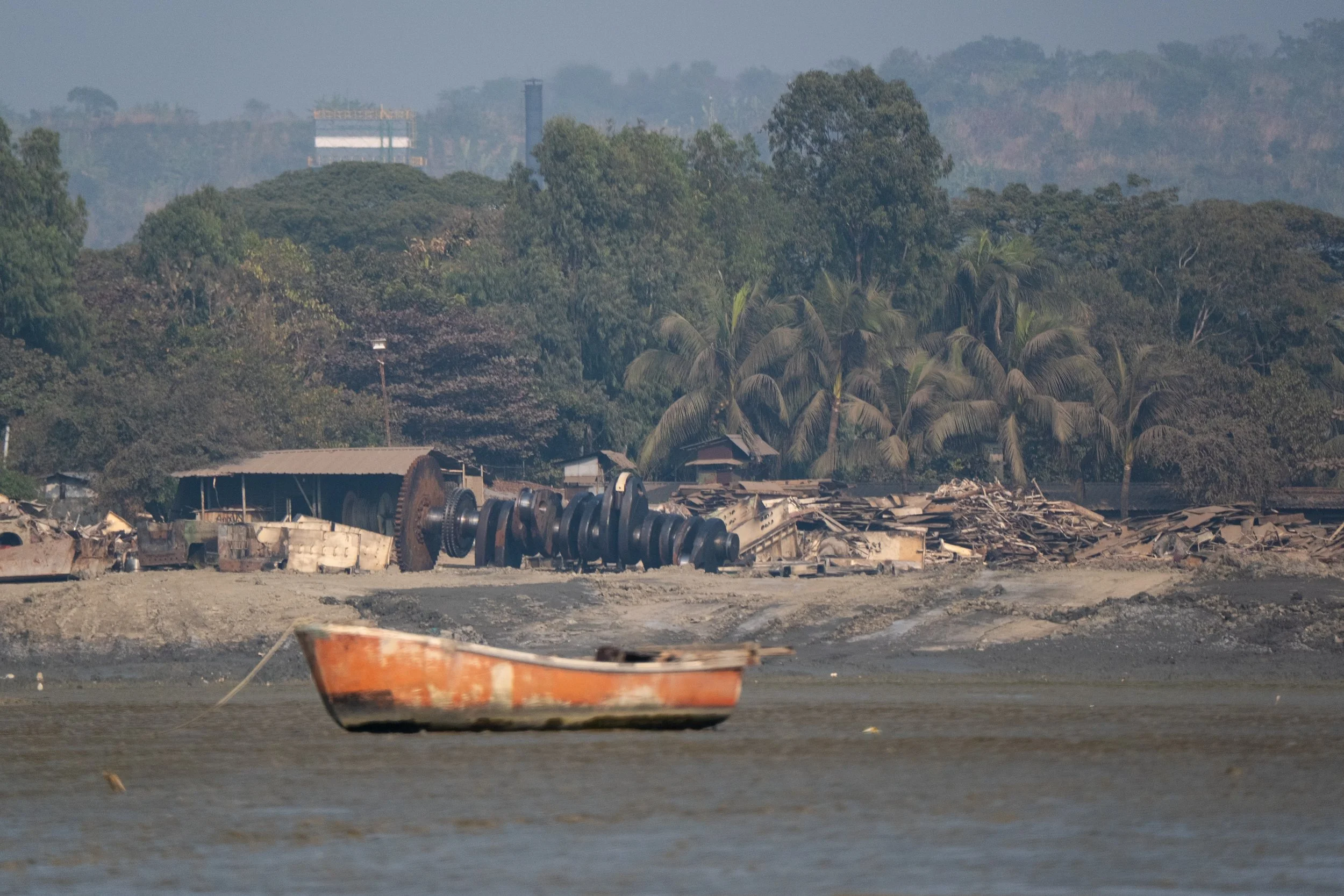
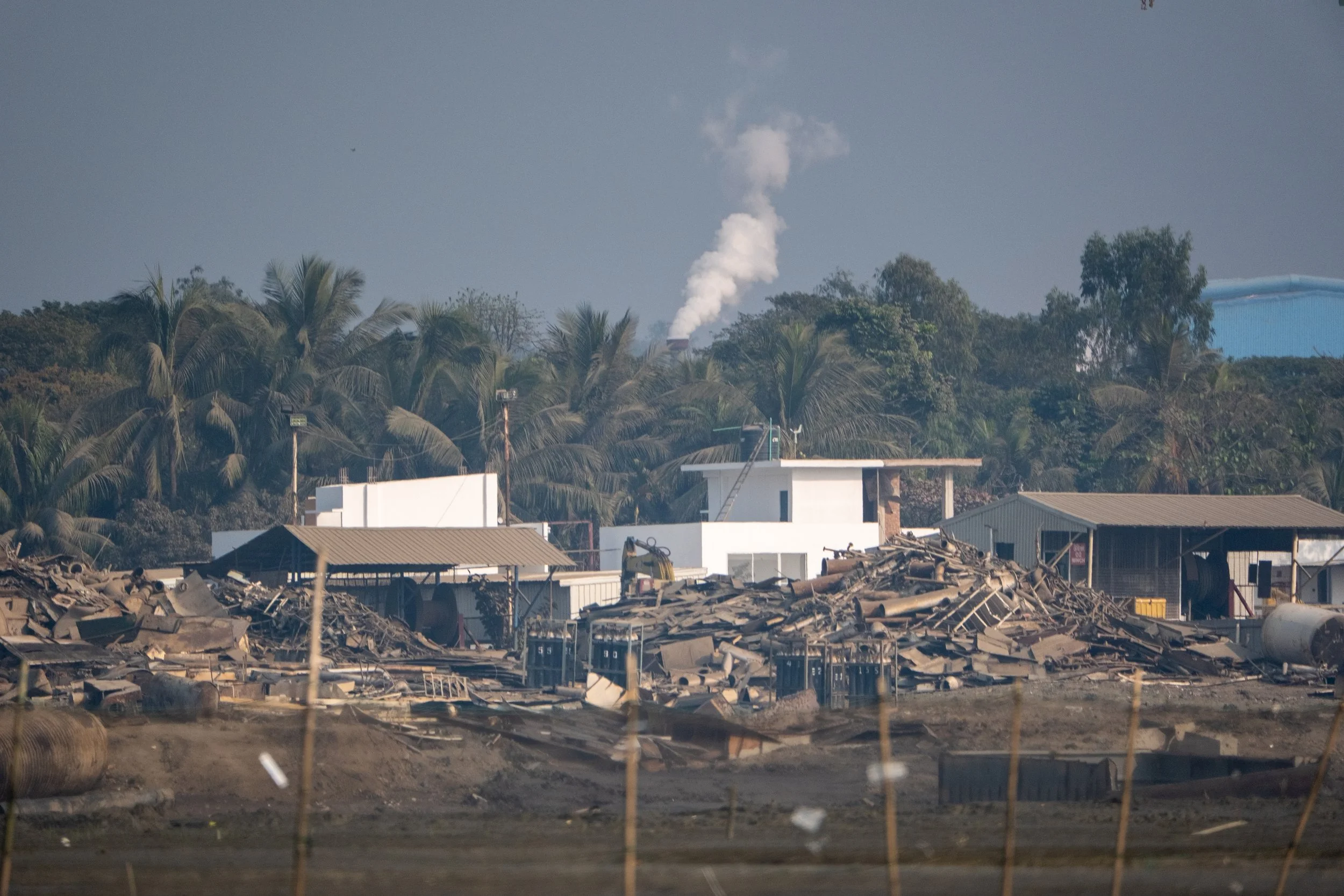
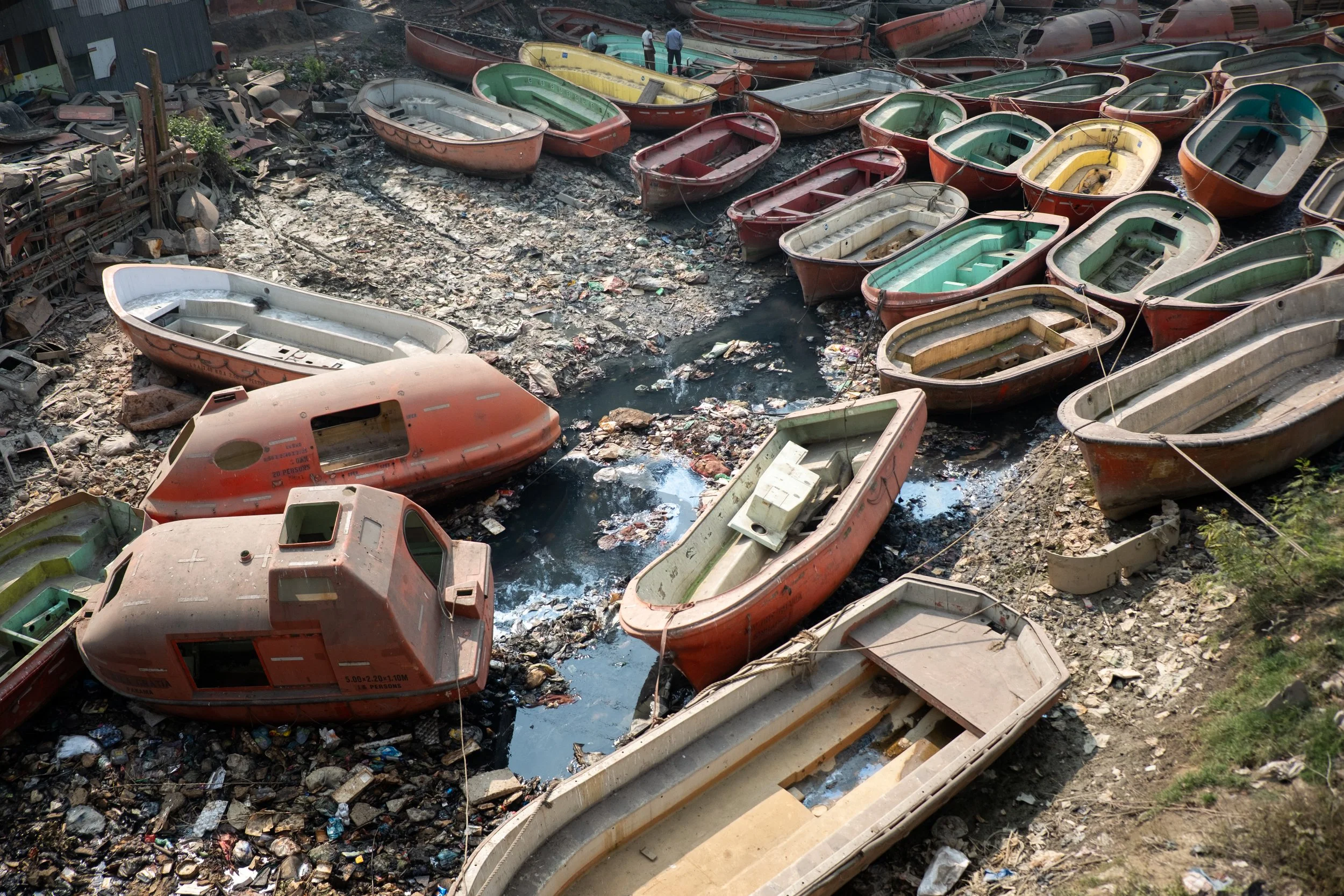
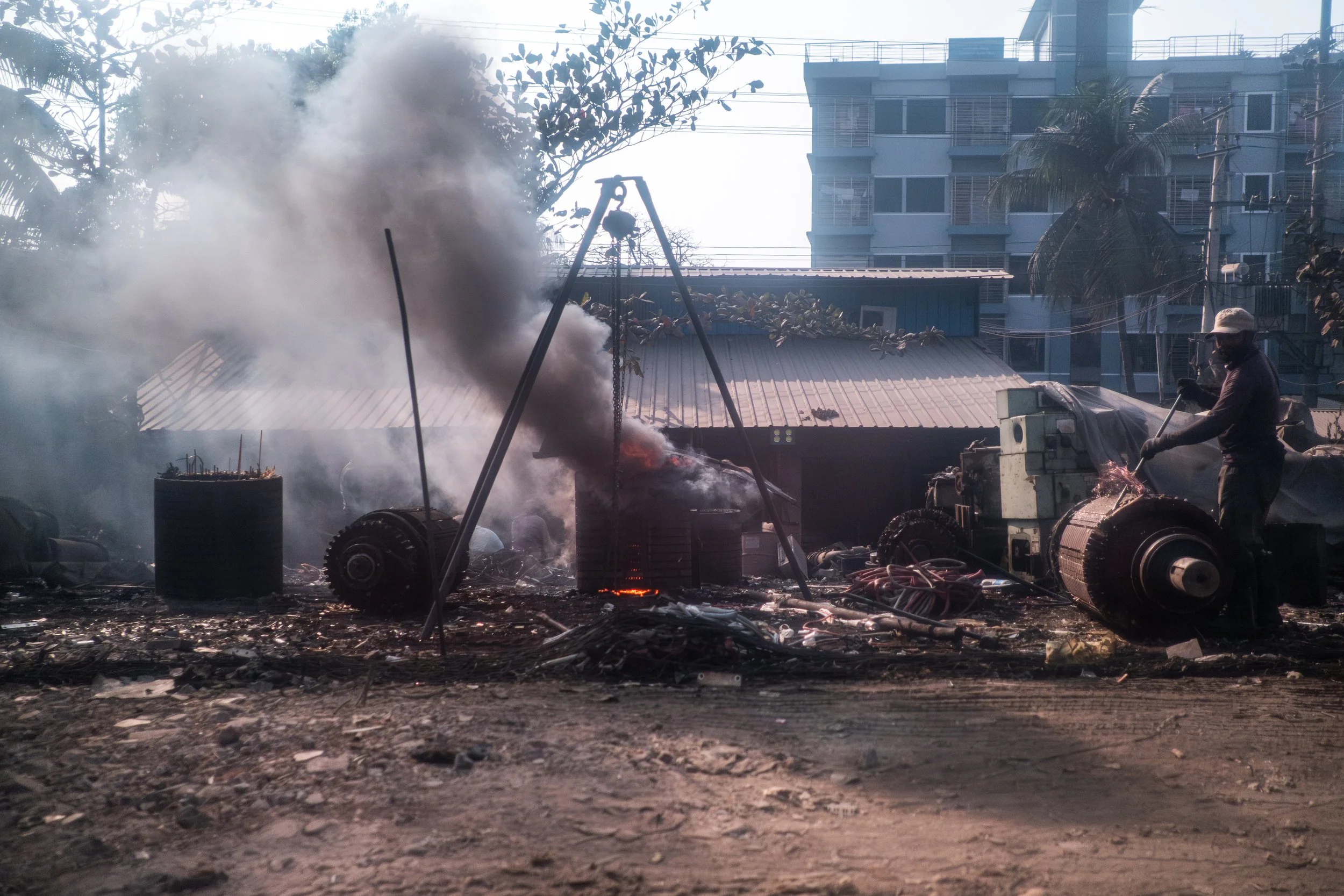
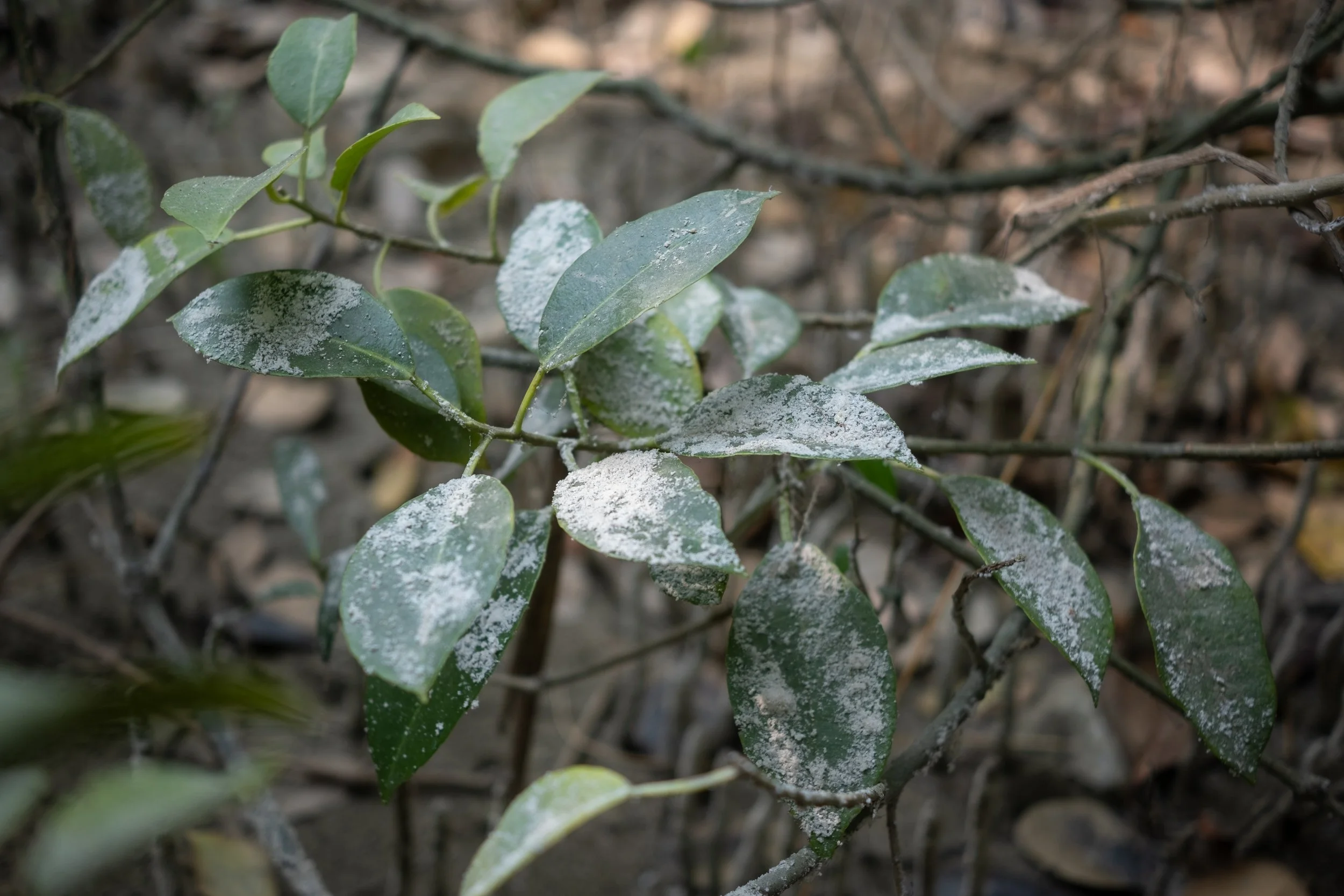
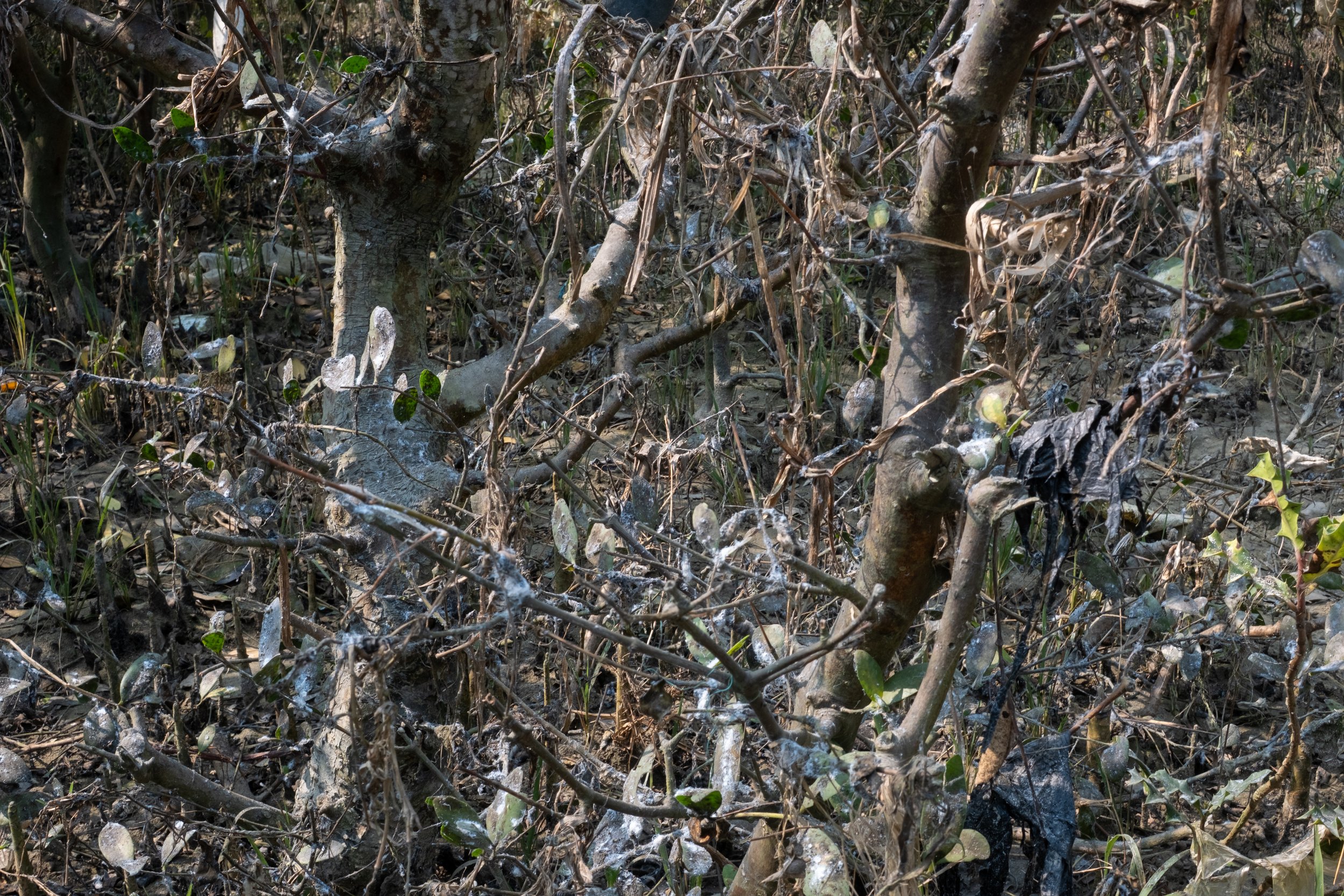
Shipbreaking and the surrounding communities are deeply interconnected. The lungs of the workers fill with asbestos and other hazardous substances, much like the mangroves, which are coated in a film of metal, perlite, and other remnants, carried on the breeze during the dissection of these hulking ships. It’s as if a ship-sized piñata has burst open, raining its contents across roadsides and villages. Lifeboats are repurposed for fishing, life-raft canisters become troughs for goats and cows, and asbestos-laden particle boards are fashioned into makeshift ovens or tables.
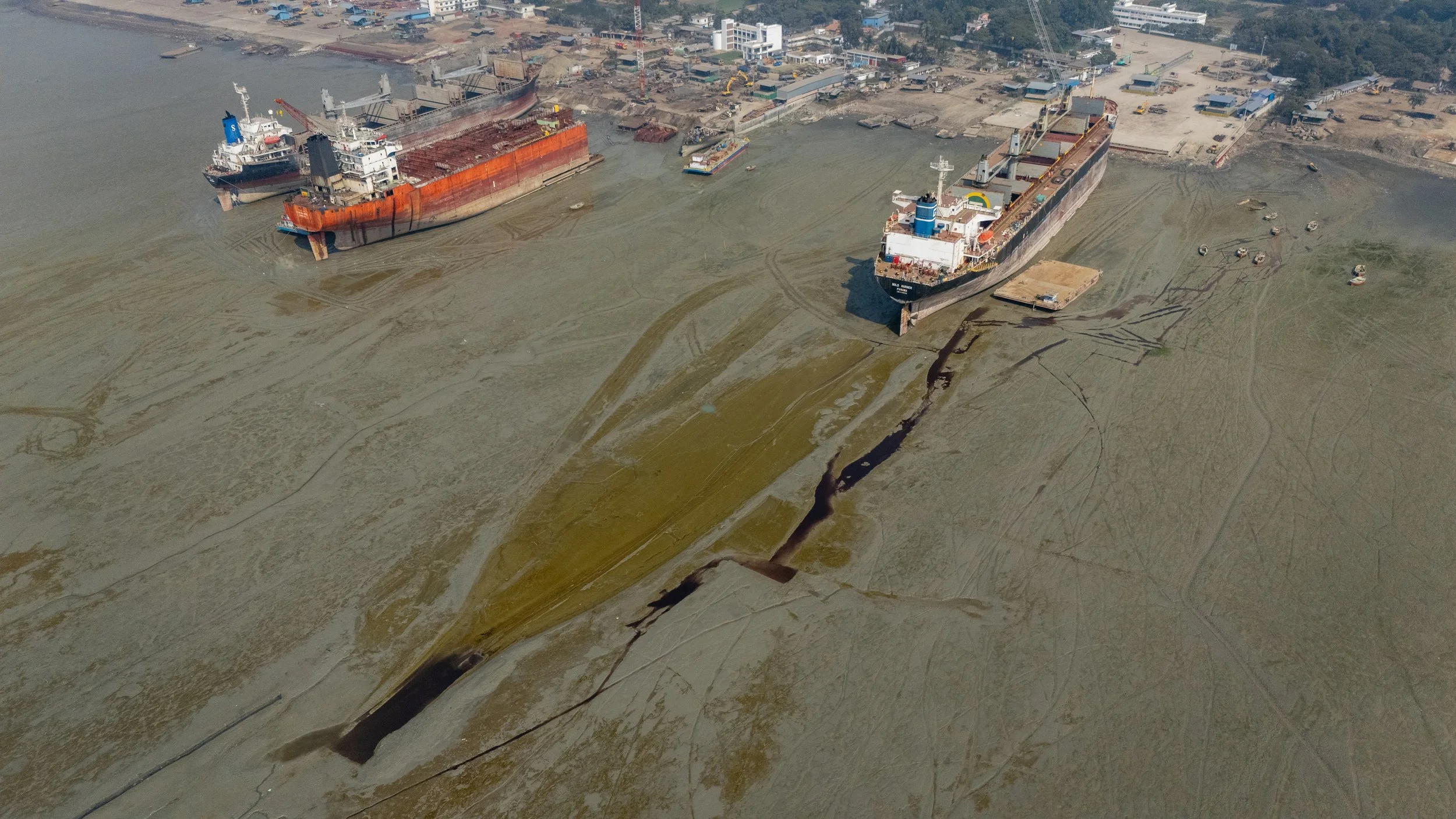
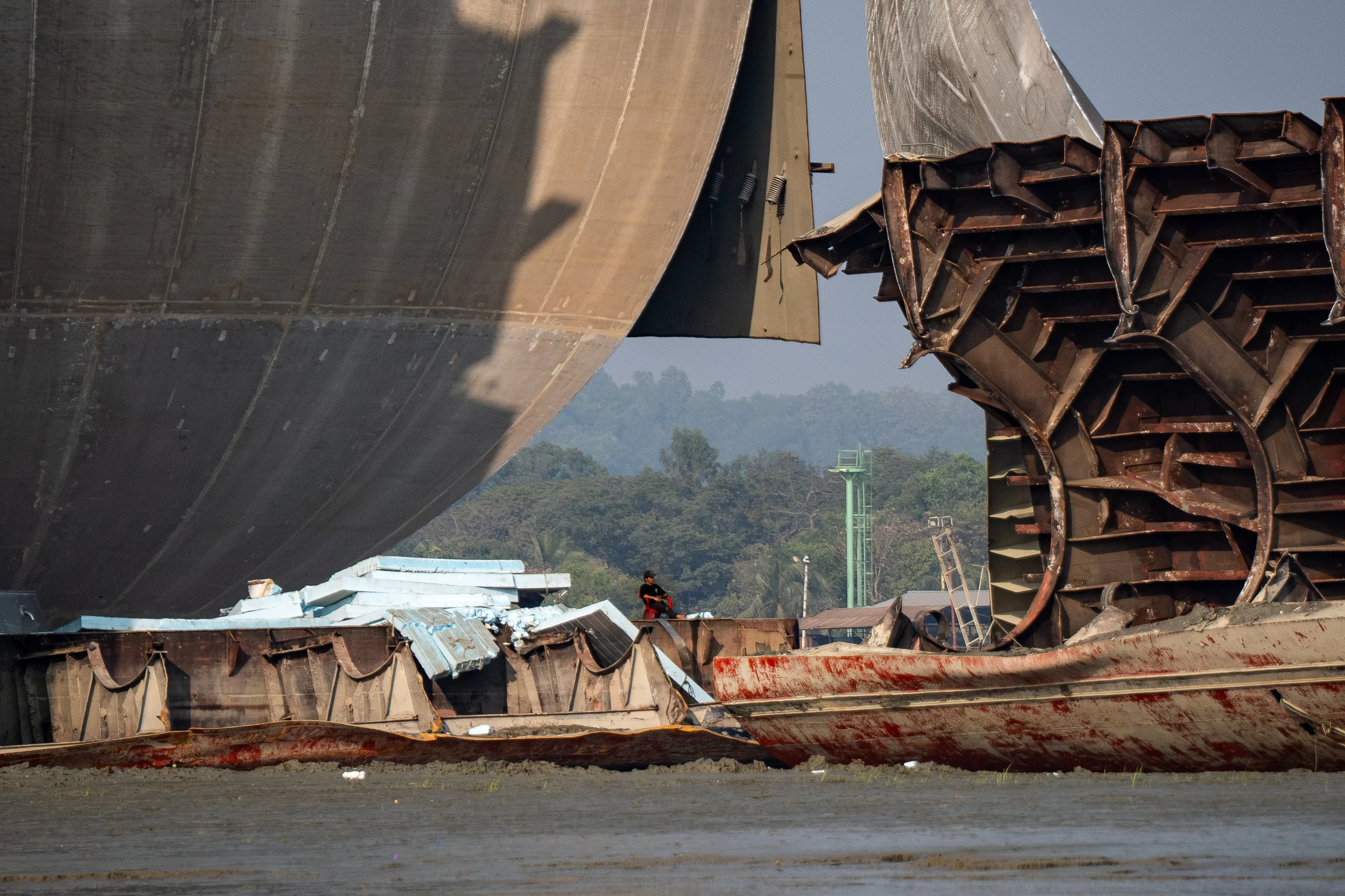
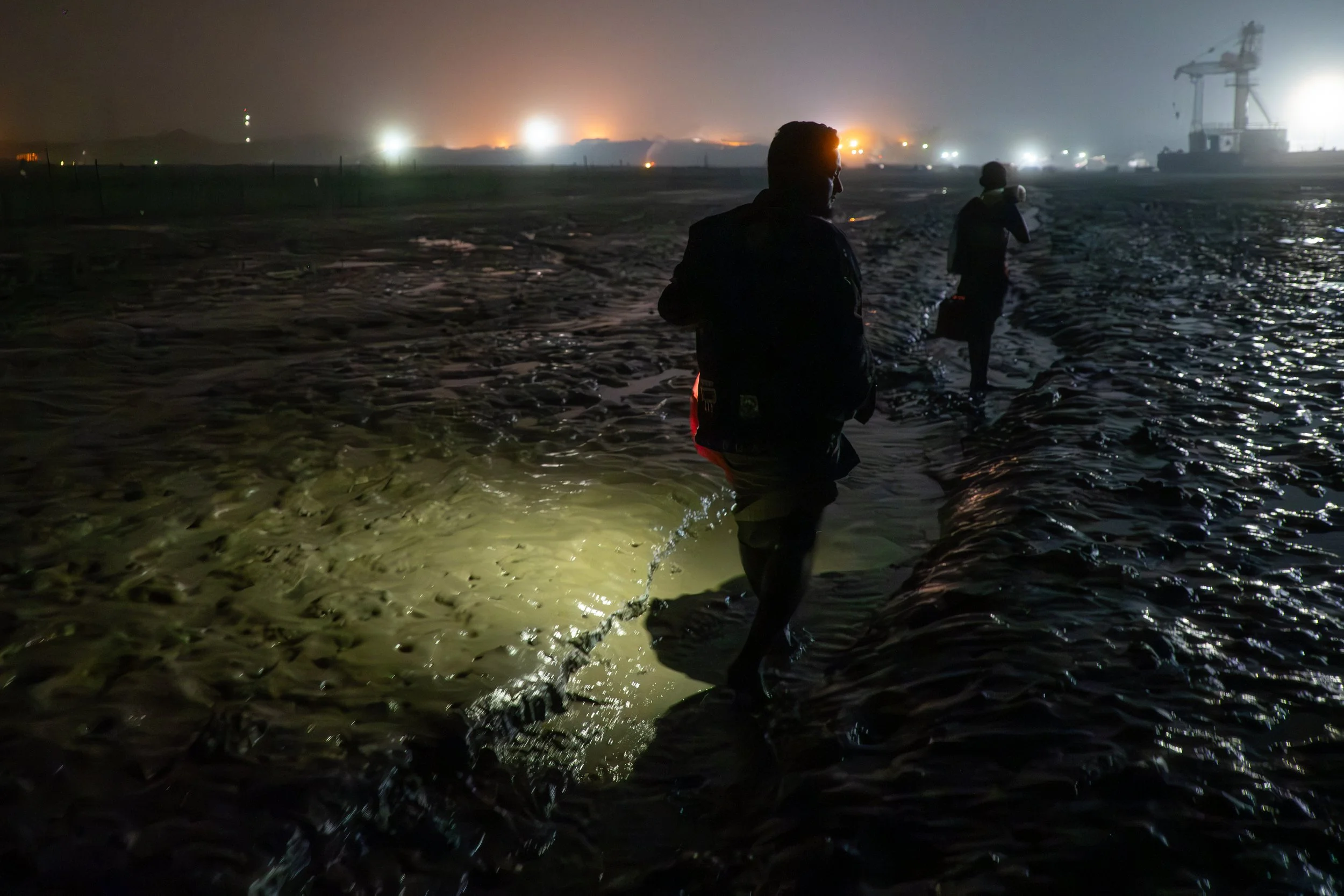
Along the coast where these ships are picked apart, the tides are semidiurnal, meaning twice per day the ocean rises up to scrub the mudflats clean, washing away traces of wrongdoing. Between these high tides come two low tides, creating a workable—albeit slippery and filthy—platform. This is when most cutting occurs. Massive sections of ships are liberated from the structure, pummeling the beach below with thunderous, earth-shaking impact. A majority of the fuels and oils left onboard are scooped and siphoned out to be resold elsewhere; but inevitably there are remnants. These flow freely into the earth, and as sure as the moon will rise, so will the tide. So every six hours, what was left will be washed away into the Bay of Bengal and out to sea.
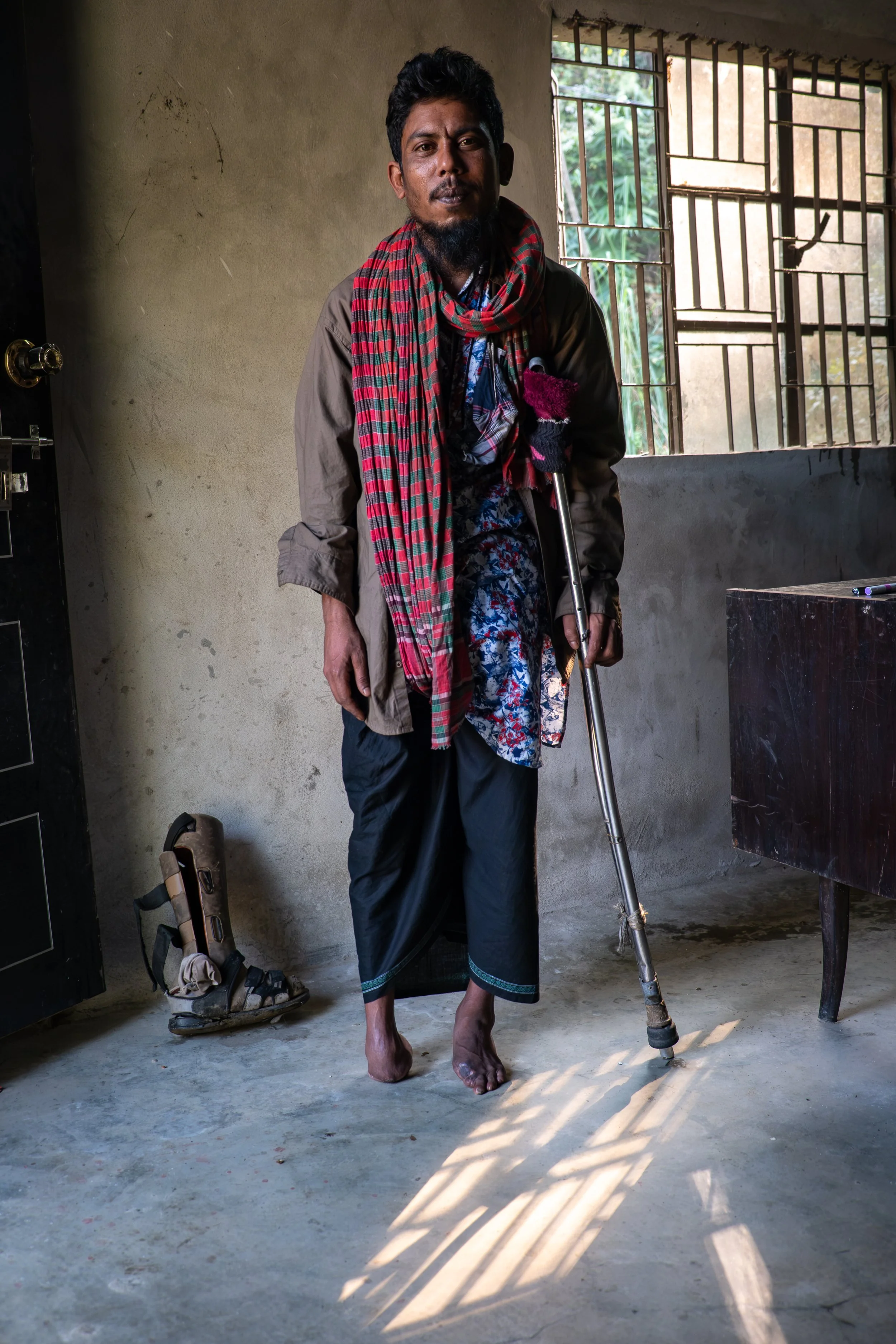
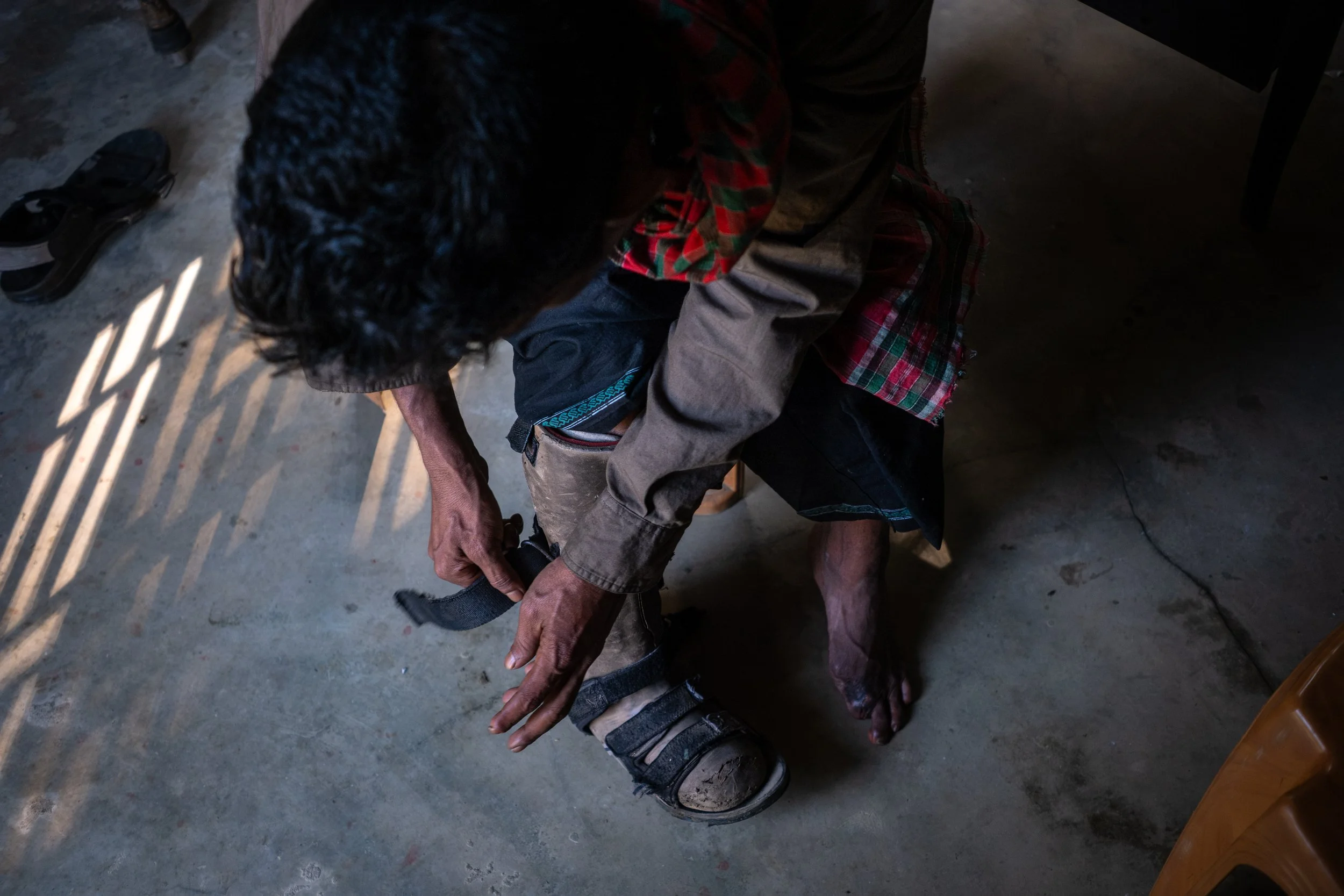
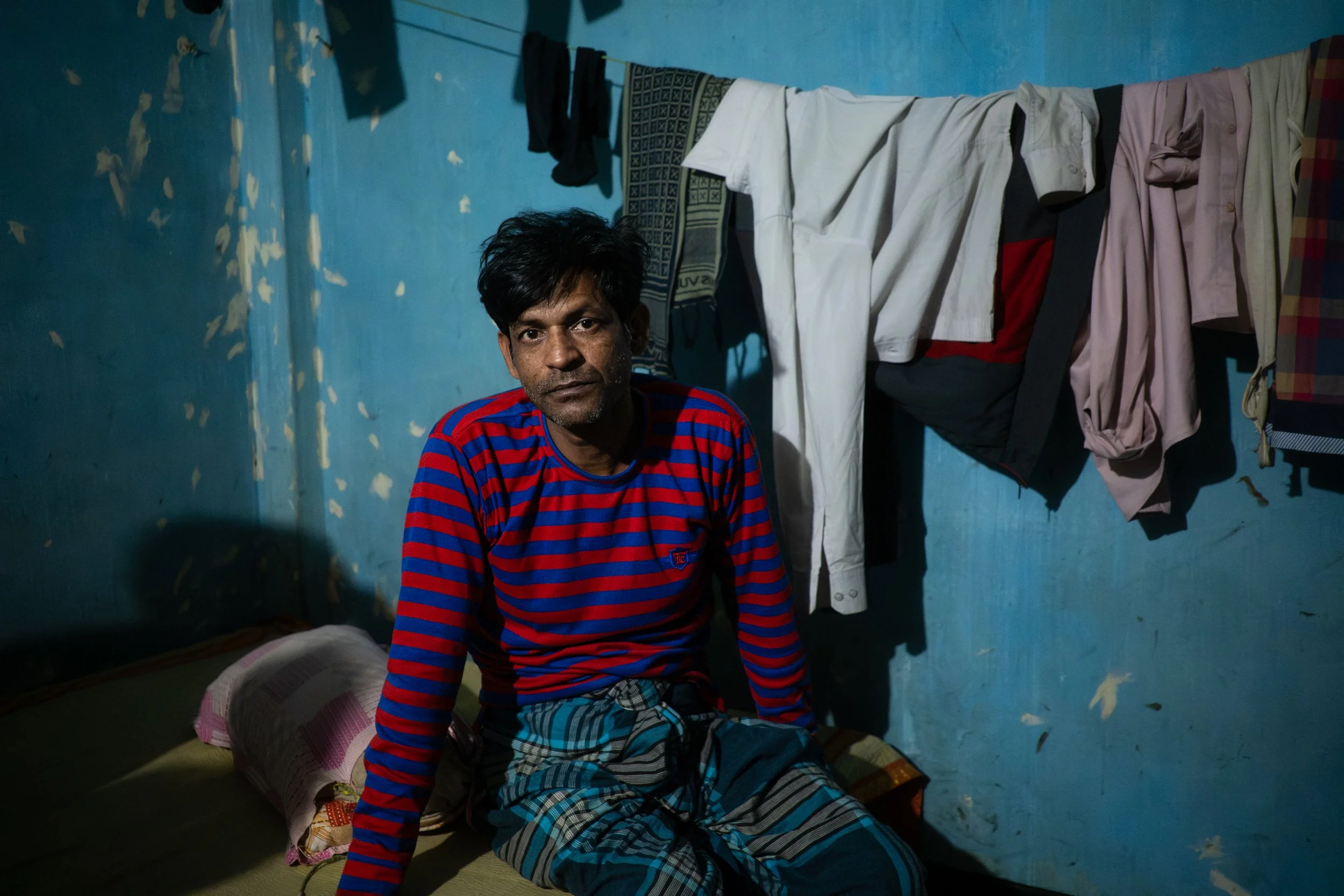
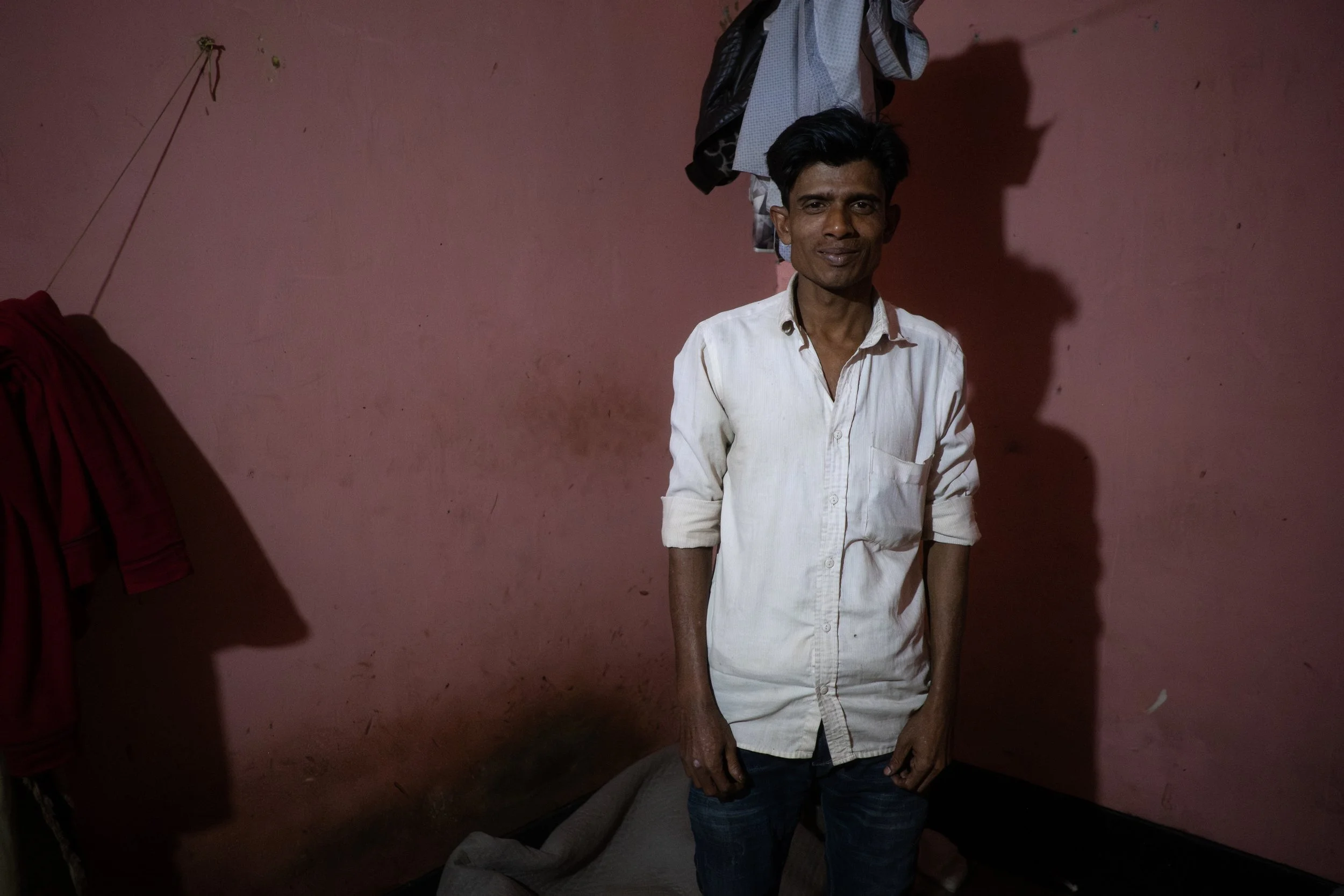
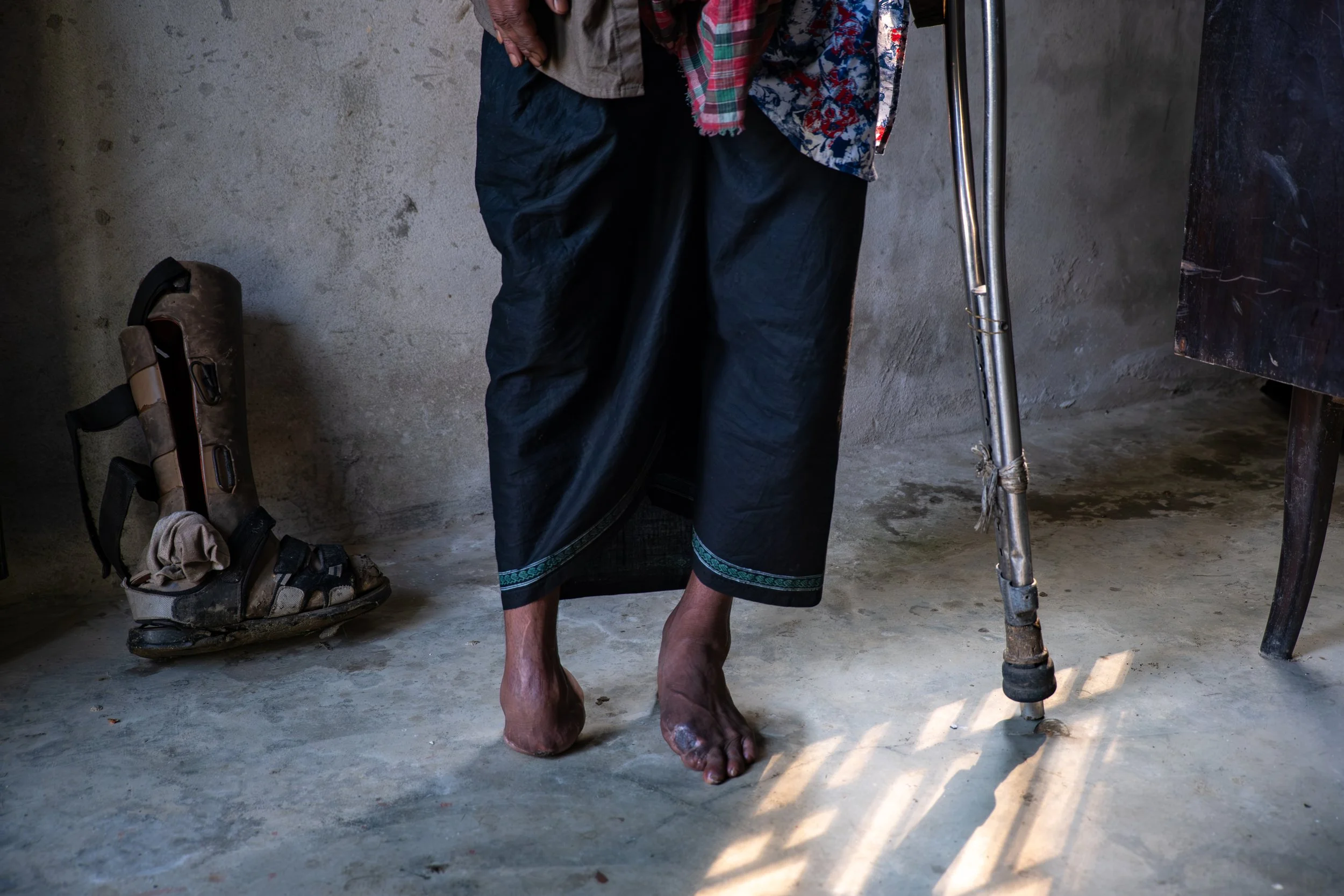
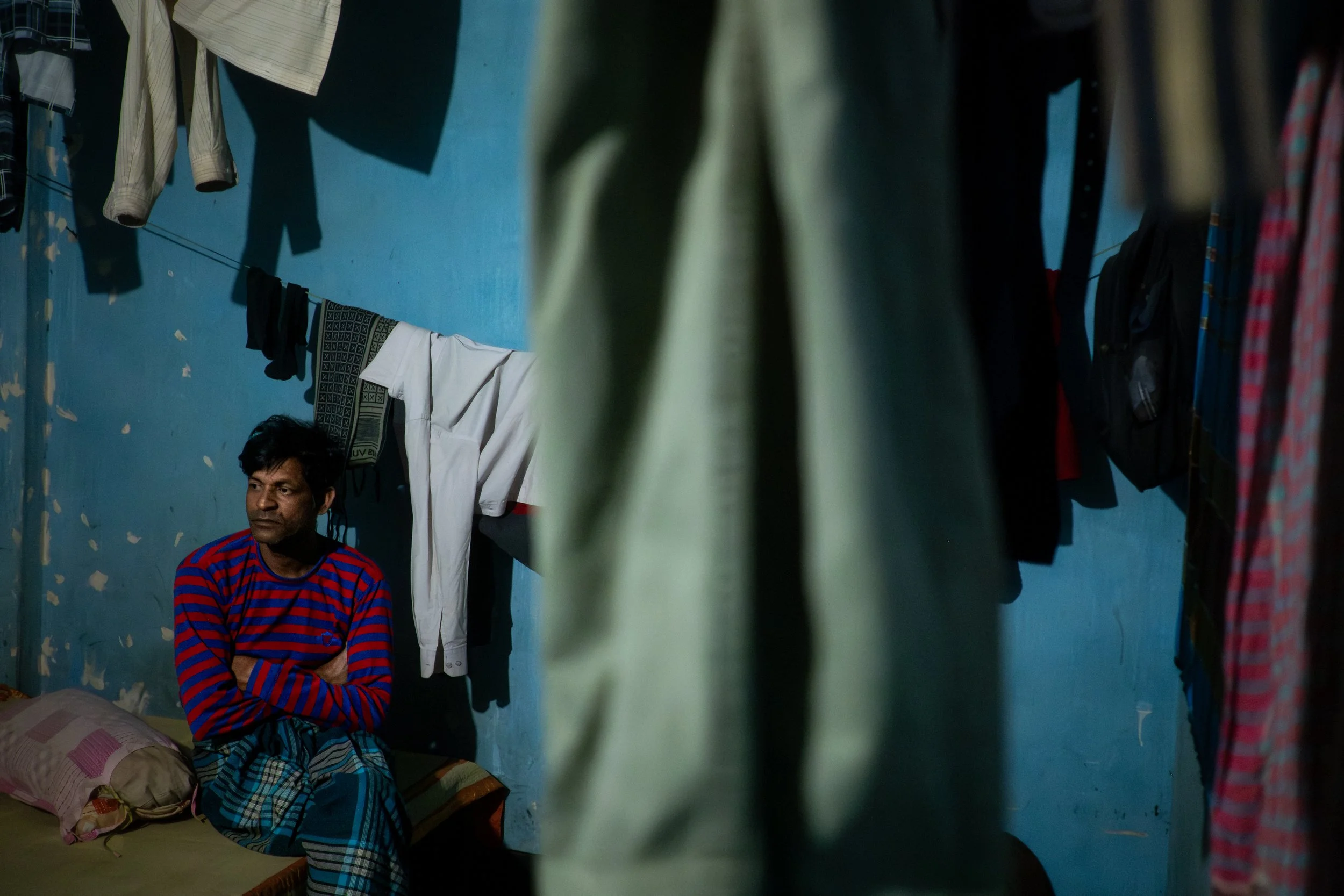
Underpaid and overworked, the workers who predominantly come from rural areas function as the gears that keep this corrupt machine turning—scraping out a meager existence while receiving little to no protection or compensation when accidents all to often do occur.